 Apparel Boxes
 Soap Boxes
 Candle Boxes
 Bakery Boxes
 Cosmetic Boxes
 Cardboard Boxes
 Vape Boxes
 Pillow Boxes
 CBD Boxes
 Cigarette Boxes
 Hair Extension Boxes
 Retail Boxes
 Hemp Boxes
 Display Boxes
 Jewelry Boxes
 Food Boxes
 Die Cut Boxes
 Toy Boxes
 Window Boxes
 Corrugated Boxes
 Kraft Boxes
 Rigid Boxes
 Mailer Boxes
 Mylar Bags
 Gift Boxes
 Seasonal Boxes
 Custom Labels
 Custom Sticker
 Sport Boxes
 Foldable Boxes
 Gable Boxes
 Insert Boxes
 Sleeve Boxes
 Tuck Boxes
 Tin Packaging
 Tube Packaging
 Small Boxes
Custom Soap Tuck Boxes
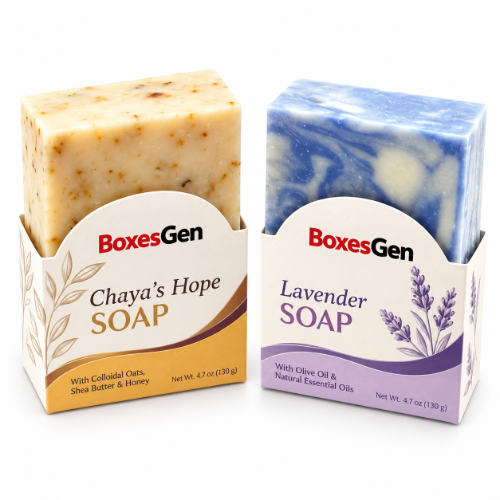
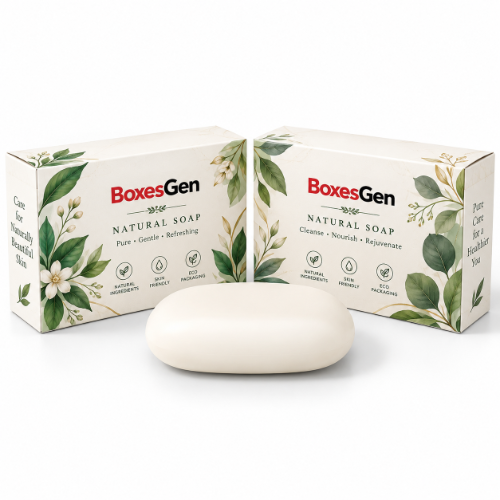
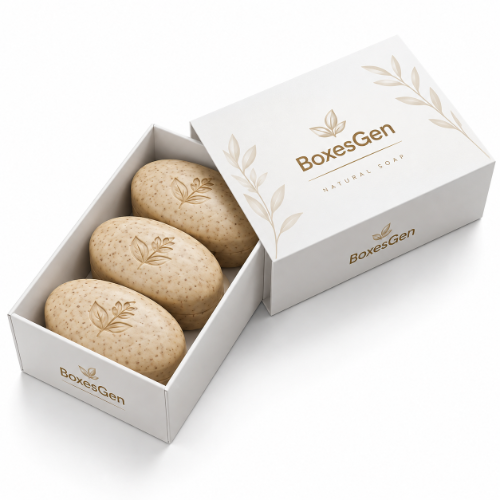
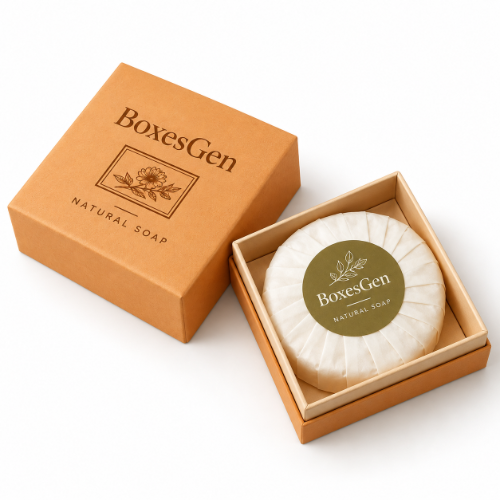
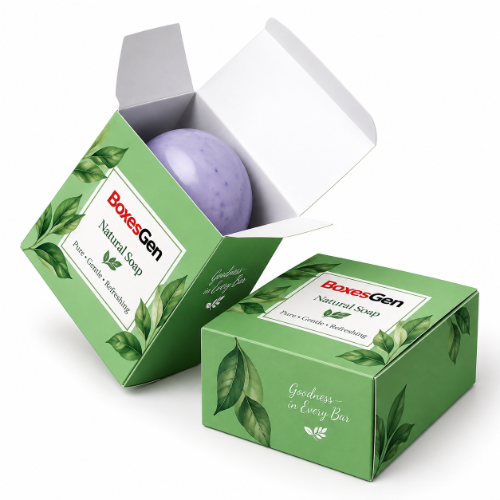
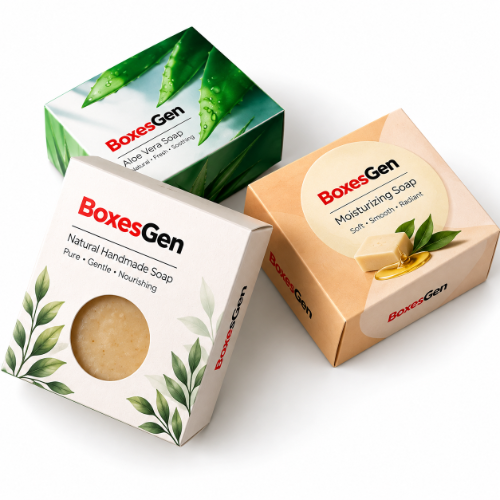
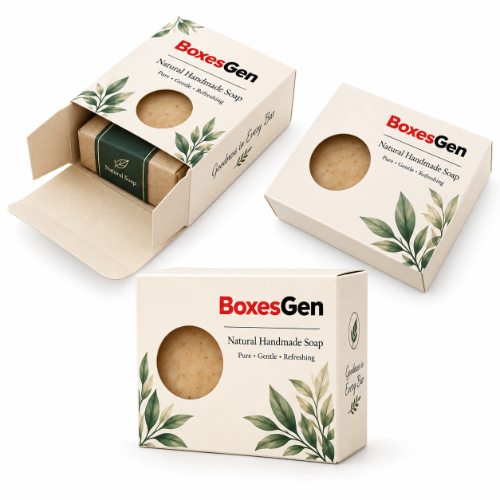
Custom soap tuck boxes from BoxesGen make packing individual soap bars simple and convenient. Designed with folding end flaps, these cartons provide an enclosed retail presentation without requiring a separate lid or complicated assembly.
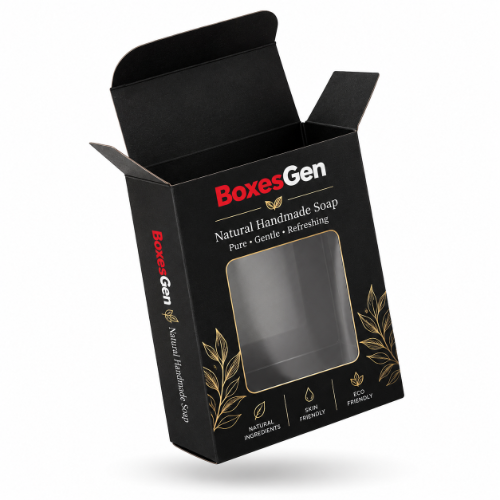
Choose straight or reverse tuck end closures in natural kraft or white cardstock, with dimensions developed around your finished soap. Personalize the exterior with printed logos, fragrance names, product information, and decorative finishes. Optional window openings are available for displaying your soap before purchase. Order customized cartons with low minimum quantities, wholesale pricing, free design assistance, and free shipping across the USA.
Availability: In stock
Start From: $0.90 $0.10 per item
Why BoxesGen
- Custom Packaging Made to Fit
- Custom Printing & Branding
- A Range of Box Styles
- Expert Packaging Support
- Quality Materials & Finishes
- Transparent Pricing – No Hidden Fees
Send Us Inquiry




Design
At BoxesGen, we can design Custom Soap Tuck Boxes in any shape, size, and style.

Here, we can print Custom Soap Tuck Boxes with custom artwork, illustrations, and colors.

Production
Buy Custom Soap Tuck Boxes from BoxesGen at wholesale rates, low MOQs, and free delivery.
| Box Style | Custom Soap Tuck Boxes |
| Dimension (L + W + H) | All Custom Sizes & Shapes |
| Quantities | Low Minimum Order Quantity |
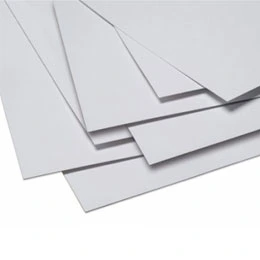
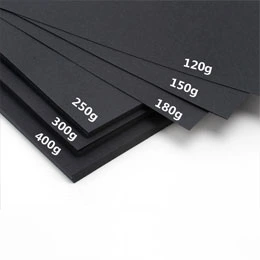
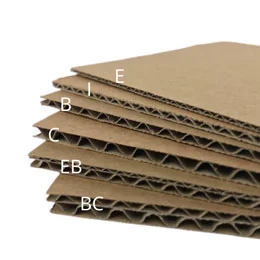
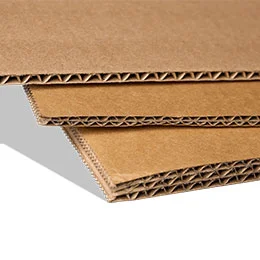
| Stock | 10pt to 28pt (60lb to 400lb) Eco-Friendly Kraft, E-flute Corrugated, Bux Board, Cardstock |
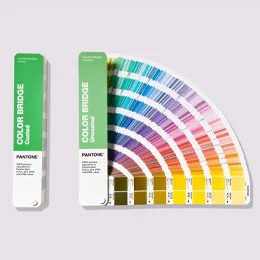
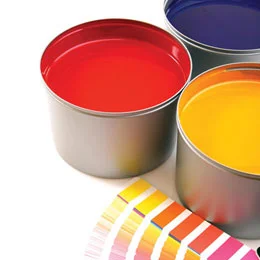
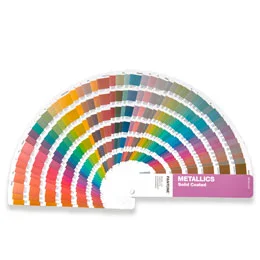
| Printing | No Printing, CMYK, CMYK + 1 PMS color, CMYK + 2 PMS colors |
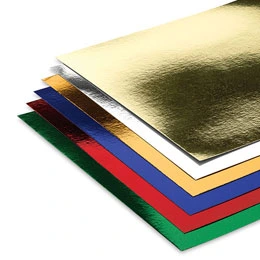
| Finishing | Gloss Lamination, Matte Lamination, Gloss AQ, Gloss UV, Matte UV, Spot UV, Embossing, Foiling |
| Included Options | Die Cutting, Gluing, Scoring, Perforation |
| Additional Options | Eco-Friendly, Recycled Boxes, Biodegradable |
| Proof | Flat View, 3D Mock-up, Physical Sampling (On request) |
| Turnaround | 2 - 4 Business Days, RUSH |
| Shipping | FREE |
Practical Soap Cartons for Everyday Production and Retail
When your business packs hundreds or thousands of soap bars, the carton needs to work just as well at the packing station as it does on the retail shelf. A convenient closure, suitable internal dimensions, and straightforward assembly can make a noticeable difference to your daily operations.
BoxesGen manufactures custom soap tuck boxes with folding panels and end flaps that close around the product. They are suitable for handmade soap manufacturers, private label suppliers, skincare brands, and businesses requiring individually branded retail cartons.
Each carton can be customized according to your soap dimensions, preferred opening direction, material, and artwork.
Which Tuck End Closure Is Right for Your Soap?
The position of the closing flaps affects how your carton opens, how the front panel appears, and how the structure is assembled. We offer several options to accommodate different product requirements.
Straight Tuck End Soap Boxes
Both end flaps fold in the same direction, making this structure suitable for brands that prefer a clean front panel with less visible flap interference. It is particularly useful for designs featuring large illustrations, centered logos, or customized window openings.
Reverse Tuck End Soap Boxes
The top and bottom flaps close in opposite directions. This widely used folding carton is a practical option for standard rectangular soap bars and recurring retail orders. Depending on the dimensions and cutting layout, it may also offer economical material usage.
Tuck Top Cartons With Auto Lock Bottoms
For heavier soap products or businesses that prioritize faster assembly, an auto lock bottom can be considered. The base opens into position as the carton is formed, while the top retains a conventional tuck closure.
Explore our complete range of custom tuck boxes to compare additional closure styles before finalizing your design.
Keep Carton Storage and Assembly Simple
Conventional folding tuck cartons can generally be supplied flat, allowing businesses to store unused packaging without occupying the space required by fully assembled boxes.
During packing, the carton is opened into shape, the bottom flap is closed, and the soap is inserted before securing the top. Standard tuck closures normally do not require additional adhesive at the packing station, although the carton itself may have a glued side seam.
If your business uses automated or semi-automated packing equipment, share the relevant carton feeding and closure requirements with our team. The structure should be evaluated for compatibility before production.
Choose Paperboard That Folds and Closes Properly
Material selection is particularly important around the scored edges and closing flaps. Excessively thick stock may make a small carton difficult to fold, while unsuitable lightweight stock may not retain its shape around a heavier soap bar.
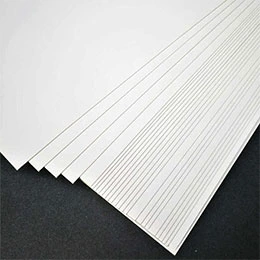
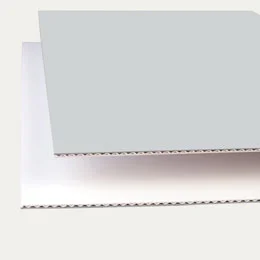
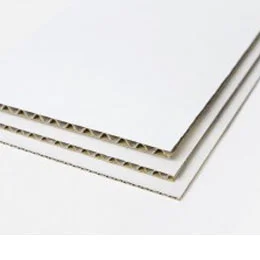
Natural kraft paperboard is suitable for understated branding and artisan collections. White cardstock offers a brighter printing surface for detailed artwork, colorful illustrations, and small product information.
Our team can help you evaluate the appropriate stock according to your soap weight, carton dimensions, and selected closure. A physical sample is useful for checking fold quality, flap fit, and the ease of inserting your product.
Printed Tuck End Soap Packaging for Retail Shelves
The enclosed front, back, and side panels provide room for a recognizable brand identity and essential product details. Print your logo and fragrance name on the main display panel, with the supplied ingredient information, net weight, barcode, and other details arranged across the remaining surfaces.
Keep important artwork clear of the folding edges and glued areas. CMYK printing, PMS color options, matte lamination, foil stamping, embossing, and spot UV can be considered according to the selected material and design.
For soaps with decorative colors, marbled patterns, or embossed surfaces, our custom soap boxes with windows offer additional product visibility while retaining a folding carton structure.
Order Wholesale Soap Tuck Boxes With Your Specifications
Whether you are introducing a new soap collection or replacing cartons for an established product line, we can prepare a quotation based on your preferred closure, internal dimensions, paperboard, printing, and order quantity.
Before approving bulk production, confirm that your soap fits comfortably, the flaps close correctly, and the artwork appears as intended. Standard tuck closures are designed for ordinary retail handling and should not be considered tamper evident or a substitute for protective outer shipping cartons.
BoxesGen offers free design assistance, digital mockups, physical sampling upon request, and free shipping across the USA. Send us your finished soap measurements, artwork, and required quantity to receive personalized wholesale pricing. You can also explore our collection of custom soap boxes for other retail and gift packaging styles.
Artwork Preparation Guide
At BoxesGen, our Artwork Preparation Guide helps ensure your custom packaging design is print-ready for high-quality results. To get started, submit vector files (AI, EPS, or PDF) in CMYK color mode, with a 1/8 inch bleed and 300 DPI resolution. Convert all text to outlines and keep it at least 1/4 inch from the edges. Review your proof to ensure accuracy before submitting. Following these steps will guarantee your design is perfectly printed on your custom boxes.
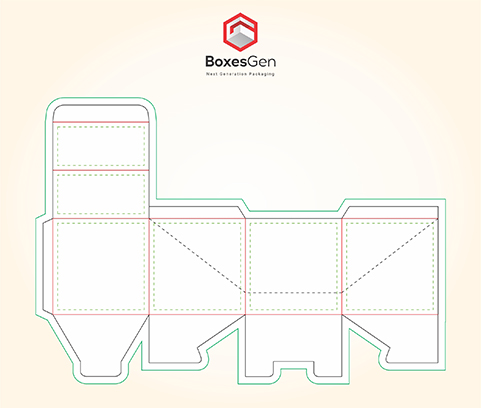
Cut Line (Black Lines):
The cut line is the outline that marks where your custom packaging will be trimmed. It is typically represented by a solid black line in your artwork file.
Perforation (Dotted Black Lines):
Perforation lines, shown as dotted black lines, indicate where the box will have small, evenly spaced holes for easy tearing or separation. These are often used for tear-away sections.
Bleed Line (Green Lines):
The bleed line is the area extending beyond the cut line, usually marked with a green line in your artwork. Typically, a 1/8 inch (0.125") bleed is required to prevent any unwanted white borders.
Safety Margin (Dotted Green Lines):
The safety margin, marked by dotted green lines, is the area around the cut line where important elements (such as text, logos, or graphics) should be kept clear.
Crease Line (Red Lines)
The crease line, marked by red lines in your artwork, indicates where the box will be folded during production.