
 Apparel Boxes
 Soap Boxes
 Candle Boxes
 Bakery Boxes
 Cosmetic Boxes
 Cardboard Boxes
 Vape Boxes
 Pillow Boxes
 CBD Boxes
 Cigarette Boxes
 Hair Extension Boxes
 Retail Boxes
 Hemp Boxes
 Display Boxes
 Jewelry Boxes
 Food Boxes
 Die Cut Boxes
 Toy Boxes
 Window Boxes
 Corrugated Boxes
 Kraft Boxes
 Rigid Boxes
 Mailer Boxes
 Mylar Bags
 Gift Boxes
 Seasonal Boxes
 Custom Labels
 Custom Sticker
 Sport Boxes
 Foldable Boxes
 Gable Boxes
 Insert Boxes
 Sleeve Boxes
 Tuck Boxes
 Tin Packaging
 Tube Packaging
 Small Boxes

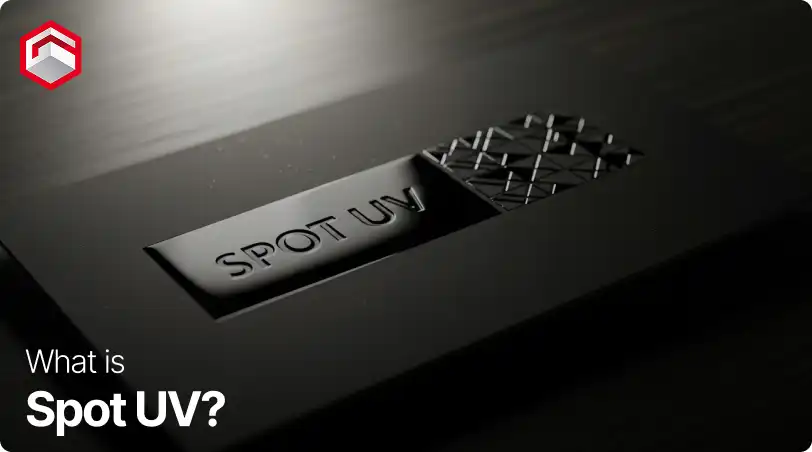
If you’ve ever picked up a business card and noticed a specific logo or pattern that gleamed under the light while the rest of the card stayed matte or unboxed a product and felt a raised, silky gloss on the brand name you’ve already experienced Spot UV firsthand. You just didn’t know what it was called.
Spot UV is one of the most powerful finishing techniques in the commercial printing and packaging industry. It’s the difference between a product box that gets glanced at and one that gets picked up. It’s the reason a luxury shopping bag feels like part of the brand experience. It’s what makes a business card worth keeping. In a world where first impressions are made in milliseconds, this coating technique gives brands a tactile and visual edge that no amount of extra ink can replicate.
Spot UV isn’t limited to paper cards it’s applied extensively to product boxes, retail packaging, paper bags, carrier bags, gift bags, and virtually any printed surface where brand impact matters. Yet this is one of the most misunderstood aspects of the technique.
Whether you’re a designer, a brand manager, a packaging buyer, or simply someone curious about how premium print products are made, this guide will give you a clear, expert-level understanding of what Spot UV is, how it works across different formats, when to use it, and why it genuinely matters for your brand.
What Is Spot UV Coating?
Spot UV (short for Spot Ultraviolet) is a selective printing finish where a clear, glossy varnish is applied to specific areas of a printed surface not the entire piece. The coating is then instantly cured and hardened using ultraviolet (UV) light, resulting in a raised, high-gloss effect that contrasts sharply with the surrounding uncoated or matte surface.
The key word here is spot. Unlike full-bleed UV coating which covers an entire sheet uniformly Spot UV is targeted and intentional. It highlights exactly what you want to draw attention to: a brand logo, a product name, an illustration, or even a subtle texture pattern.
The result is a print finish that is simultaneously visual and tactile. It catches light. It invites touch. And it communicates quality before a single word is read.
How Does Spot UV Work? The Technical Process Explained
Understanding the process behind Spot UV helps explain why it looks and feels the way it does.
Step 1: Design and File Preparation
The Spot UV areas are defined during the design stage. Designers create a separate layer or file often called a “die line” or “spot layer” that maps exactly where the UV coating should be applied. This precision is what makes the technique so versatile.
Step 2: Base Printing
The substrate (paper, card, or packaging material) is first printed using conventional methods typically offset or digital printing. This forms the base artwork: colors, imagery, text.
Step 3: UV Varnish Application
A clear UV varnish is then applied selectively to the pre-defined areas using a printing plate or digital coating system. Only the specified regions receive the varnish.
Step 4: UV Curing
The coated sheet passes under powerful ultraviolet lamps. The UV light triggers a photochemical reaction in the varnish, causing it to cure (harden) almost instantaneously. This rapid curing is what gives the coating its durability and its characteristic high-gloss, slightly raised texture.
No heat is involved in this process, which means there’s minimal risk of warping or damaging sensitive paper stocks.
Spot UV vs. Full UV Coating: What’s the Difference?
Many people confuse Spot UV with full UV coating. While both use the same type of varnish and curing process, the application method and visual outcome are entirely different.
Full UV Coating covers the entire surface of the printed piece. It creates a uniform gloss finish that enhances color vibrancy and adds protection across the board. It’s often used on book covers, catalogues, and packaging where overall durability and sheen are the priority.
Spot UV, by contrast, is applied only to select areas. Its power comes from contrast the interplay between coated and uncoated (or coated and matte laminate) surfaces. This contrast is what creates the dramatic, premium look that full UV simply cannot achieve.
Think of it this way: full UV is a suit with a shine. Spot UV is a matte black suit with a glossy pocket square. One is polish; the other is personality.
Types of Spot UV Finishes
Spot UV isn’t limited to a single look. Printers and finishers offer several variations depending on the desired effect:
Gloss Spot UV
The most common variant. A high-shine, mirror-like gloss applied to targeted areas. Works especially well against a matte laminate background, where the contrast is most striking.
Soft-Touch or Velvet Spot UV
A tactile variant that uses a slightly different varnish formula to create a velvety, soft-to-the-touch feel. Often used on luxury cosmetic packaging and premium stationery.
Raised Spot UV
Sometimes called 3D Spot UV, this technique applies a thicker layer of varnish to create a physically raised, embossed-like texture. The surface can actually be felt with the fingertip. It’s popular for logos on premium business cards and invitation suites.
Flood with Spot UV Reverse
Here, the entire surface is coated with a matte laminate, and then Spot UV is applied over specific areas to make them “pop” against the flat background. This reverse contrast technique is one of the most visually dramatic in print finishing.
Where Is Spot UV Commonly Used?
Spot UV has found a home across virtually every segment of the print and packaging industry. Here’s where it delivers the most impact:
Business Cards
Premium business cards are perhaps the most iconic application of Spot UV. A logo or name highlighted in gloss against a matte card creates an immediate impression of quality and attention to detail. In industries like finance, law, luxury retail, and design, this matters enormously.
Product Packaging
From cosmetics to confectionery, Spot UV is a staple of premium product packaging. It helps brand elements logos, product names, decorative motifs stand out on a retail shelf filled with competing products. Shelf standout is measurable and proven to influence purchasing decisions.
Book and Magazine Covers
Publishers use Spot UV to add depth and dimension to covers. A title that gleams under store lighting draws the eye in a way that flat printing never can.
Marketing Collateral
Brochures, flyers, folders, and presentation materials all benefit from Spot UV when the goal is to leave a lasting impression. Sales pitches, investor decks, and event programs regularly feature this finish.
Greeting Cards and Invitations
Wedding invitations, luxury greeting cards, and event invitations frequently incorporate Spot UV for tactile elegance. The raised texture on a floral motif or monogram communicates craftsmanship before the envelope is even opened.
Labels and Stickers
Wine labels, gourmet food labels, and premium product stickers use Spot UV to add a layer of sophistication that transforms an everyday item into a statement of quality.
Spot UV on Boxes: Elevating Product Packaging to a New Level
One of the most commercially significant and often underappreciated applications of Spot UV is on product boxes and folding cartons. From a humble cosmetic box sitting on a pharmacy shelf to a luxury gift box presented at a jewellery counter, Spot UV on packaging is doing serious strategic work.
Why Boxes Benefit So Powerfully from Spot UV
A product box is often the first physical interaction a customer has with your brand. Before they experience the product itself, they hold the box. They read it. They feel it. That sensory moment is a branding opportunity and Spot UV is purpose-built to maximise it.
When a brand logo on a matte black box suddenly catches the light at a certain angle, revealing a glossy, slightly raised surface beneath, it creates a moment of delight. That moment is not accidental. It’s engineered.
Types of Boxes That Use Spot UV
Spot UV is applied across a wide range of box formats:
Folding Cartons — The most common format for retail packaging. Cereal boxes, pharmaceutical cartons, cosmetic boxes, and food packaging all use folding cartons. Spot UV on these adds shelf impact without requiring die-cut windows or foil, keeping costs reasonable while elevating perceived quality.
Rigid Boxes (Set-Up Boxes) — These are the heavyweight, non-collapsible boxes associated with luxury goods: perfume, watches, jewellery, electronics, and premium confectionery. Spot UV on rigid boxes is almost standard practice in luxury packaging. The finish is typically applied to the outer wrap (often a speciality paper laminated over the board structure), and the contrast between matte laminate and gloss UV can be breathtaking.
Mailer Boxes and Subscription Boxes — The subscription economy has created enormous demand for premium unboxing experiences. Brands like beauty subscription services and premium food boxes invest heavily in Spot UV on their mailer boxes because the unboxing moment is filmed, shared, and reviewed online. A box that looks and feels premium in video content is free marketing.
Gift Boxes and Presentation Boxes — Gift packaging lives and dies by its first impression. A Spot UV finish on a gift box communicates to the recipient that the sender invested thought and quality before the lid is even lifted.
Pharmaceutical and Healthcare Packaging — Even in regulated industries, Spot UV plays a role. Premium skincare brands and nutraceutical companies use it to differentiate their products from generic competitors and signal clinical credibility.
What Areas Are Typically Coated on Boxes?
The most effective Spot UV applications on boxes tend to be focused and purposeful:
- Brand logos and wordmarks — the most common application
- Product names — to draw the eye on a retail shelf
- Decorative border patterns — to add texture and visual depth
- Imagery details — highlighting specific elements within a printed illustration
- Background texture patterns — a subtle all-over pattern that catches light without dominating the design
Spot UV on Boxes: Key Benefits
Retail Shelf Impact — In a crowded retail environment, a product that catches the light literally stands out. Spot UV gives packaging a three-dimensional quality under store lighting that flat-printed competitors simply cannot match.
Brand Premium Perception — Consumers make quality judgements in under two seconds. A box with Spot UV finish registers as a premium product, which influences willingness to pay and repeat purchase behaviour.
Tactile Unboxing Experience — As unboxing culture continues to grow through social media, the tactile quality of packaging has become a marketing asset in its own right. A Spot UV finish that can be seen and felt on camera elevates brand content.
Structural Durability — The UV cured varnish adds a protective layer to the printed surface of the box, helping it resist transit scuffs, shelf handling wear, and moisture all of which extend the time the packaging looks pristine in the hands of the end consumer.
Cost-Effective Luxury — Compared to full foil stamping on every panel of a box, Spot UV achieves a comparable luxury impression at a fraction of the cost, making premium packaging accessible at mid-range production budgets.
Spot UV on Bags: Where Brand Experience Meets Everyday Visibility
Bags are perhaps the most publicly visible form of branded packaging. A carrier bag, a paper shopping bag, a gift bag these travel through streets, shops, offices, and homes. They are mobile advertising. And when they carry a Spot UV finish, they carry the brand’s quality signal with them everywhere they go.
Types of Bags That Use Spot UV
Retail Carrier Bags (Paper) — High-street fashion brands, luxury retailers, and premium boutiques rely on branded paper bags as a core part of their physical retail identity. A Spot UV logo on a matte-laminated paper bag is one of the most commonly recognised forms of the technique, even if shoppers don’t know the terminology. The bag itself becomes part of the brand language.
Luxury Shopping Bags — At the highest end of retail jewellery, designer fashion, prestige cosmetics shopping bags are often kept and reused by customers long after the product has been used. These brands invest in heavyweight paper stock, ribbon handles, and premium Spot UV finishes because the bag is itself a brand touchpoint with lasting value.
Gift Bags — Whether for corporate gifting or consumer retail, gift bags with Spot UV convey the message that what’s inside is worth the presentation. The finish signals care, quality, and intentionality.
Kraft Paper Bags — Artisan food brands, bakeries, coffee roasters, and sustainable lifestyle brands frequently use Spot UV on kraft paper bags. The contrast of a gloss UV logo against raw, natural kraft paper is a particularly striking combination simultaneously rustic and refined.
Laminated and Non-Woven Bags — Reusable shopping bags, conference bags, and promotional tote bags increasingly feature Spot UV finishes. As environmental awareness pushes brands toward reusable packaging, the perceived quality of those reusable items becomes even more important and Spot UV plays a direct role in elevating them.
Boutique and Event Bags — Pop-up shops, product launches, fashion weeks, and trade shows all produce bespoke bags. Spot UV on event packaging creates a collectible quality that attendees notice and keep.
What Makes Spot UV on Bags Technically Different?
Applying Spot UV to bags introduces some technical considerations that don’t exist for flat print:
Substrate Flexibility — Unlike rigid packaging or flat cards, bags flex during use. The UV coating must be applied to a substrate and laminate combination that can flex without cracking. Most professional packaging converters use a combination of matte or gloss laminate with the Spot UV layer applied over the top this layered structure provides both the visual contrast and the flexibility the substrate needs.
Handle and Crease Areas — Designers should avoid placing Spot UV coverage over fold lines, crease areas, or near punched handle holes. The mechanical stress on these areas can cause the coating to crack over time, which looks poor and undermines the premium signal.
Print Side and Varnish Registration — On paper bags, precise registration between the printed image and the Spot UV layer is essential. Any misalignment even a fraction of a millimetre is visible, particularly on logos and fine lettering. This is why Spot UV bags should always be produced by experienced packaging converters with tight registration tolerances.
Spot UV on Bags: Key Benefits
Mobile Brand Visibility — A branded bag with Spot UV is a walking advertisement. Unlike static packaging sitting on a shelf, it moves through the world with the customer. Every person who sees that bag is a potential impression.
Reuse Encouragement — Consumers are significantly more likely to reuse a bag that looks and feels premium. A matte laminated paper bag with a gloss Spot UV logo doesn’t feel disposable it feels worth keeping. This has both sustainability and brand longevity implications.
Elevated Gifting Experience — For brands in the gifting sector, a Spot UV gift bag creates a “before and after” experience: the anticipation built by the premium exterior is part of the gift itself.
Competitive Differentiation — In a retail environment where carrier bags are often plain or generically printed, a bag with a Spot UV finish is immediately noticed. It signals that the brand behind it thinks carefully about every detail of the customer experience.
Social Media Shareability — In the age of Instagram and unboxing content, a bag that looks exceptional in photographs has measurable marketing value. Spot UV catches light in a way that photographs beautifully — particularly in natural light or with a directional light source.
The Core Benefits of Spot UV Across All Formats
Whether applied to a business card, a product box, or a shopping bag, the fundamental benefits of Spot UV remain consistent though each format amplifies certain advantages more than others.
1. Enhanced Visual Contrast
The deliberate contrast between gloss and matte surfaces creates a visual hierarchy that guides the viewer’s eye. On a box, it draws attention to the brand logo over the product image. On a bag, it makes the wordmark stand out against a plain background. It tells the audience without words: this is what matters.
2. Tactile Engagement
Print is one of the few marketing mediums that can engage the sense of touch. Spot UV’s texture invites people to handle the piece whether that’s a card being handed over in a meeting or a box being lifted from a shelf. That tactile engagement increases dwell time and brand memory in a way digital advertising simply cannot replicate.
3. Perceived Premium Quality
Consumer psychology research consistently confirms that tactile quality signals product quality. A product in a box with Spot UV feels more premium than an identical product in a plain printed box. A shopping bag with a raised UV logo feels like it came from a better brand. That perception translates directly into purchasing decisions, brand loyalty, and willingness to pay.
4. Durability and Surface Protection
UV coatings are not purely decorative. The cured varnish provides a hard protective layer that resists scuffing, moisture, and general handling wear. For boxes navigating retail supply chains and bags enduring daily use, this protection extends the life of the packaging and keeps it looking pristine for longer.
5. Versatility Across Substrates and Formats
Spot UV can be applied to coated papers, uncoated stocks, kraft paper, laminated boards, and more. It works on flat sheets, folded boxes, and shaped bag substrates. It pairs beautifully with foil stamping, embossing, die-cutting, and matte laminates giving designers and brand managers enormous creative flexibility regardless of the format they’re working in.
6. Strong Return on Investment
For packaging and branded materials, the cost of Spot UV is almost invariably justified by the brand impact it creates. A premium-feeling box reduces the price sensitivity of the customer. A high-quality bag encourages reuse and generates ongoing brand visibility. These are measurable returns that extend well beyond the initial print budget.
Spot UV and Sustainability: What You Need to Know
As environmental responsibility becomes central to brand values, the sustainability of print finishes is increasingly scrutinised.
Traditional UV coatings are petroleum-based and can complicate paper recycling, since the varnish bonds to the substrate during curing. However, the print industry has made significant strides in recent years:
- Water-based UV coatings are now widely available and offer improved recyclability.
- UV LED curing systems consume significantly less energy than traditional mercury-arc UV lamps.
- Some coating formulations are now certified for compostability alongside paper waste.
If sustainability is a priority, ask your printer specifically about their UV coating chemistry and curing technology. Responsible printers will be transparent about their materials and their environmental certifications.
Spot UV vs. Other Premium Finishes: A Quick Comparison
It helps to understand how Spot UV compares to other finishing techniques designers frequently consider:
| Finish | Effect | Cost Level | Tactile? |
|---|---|---|---|
| Spot UV | Selective gloss on matte background | Moderate | Yes (raised) |
| Foil Stamping | Metallic shine on specific areas | High | Slightly |
| Embossing | Raised 3D impression | Moderate–High | Yes (strong) |
| Aqueous Coating | Uniform protective sheen | Low | Minimal |
| Soft-Touch Laminate | Velvety matte overall finish | Moderate | Yes (surface) |
| Debossing | Pressed-in 3D impression | Moderate–High | Yes (indent) |
Spot UV occupies an ideal middle ground: it delivers a premium, tactile result at a cost that’s achievable for mid-to-high budget projects, without the full investment of metallic foiling or full embossing.
Design Tips for Getting the Most Out of Spot UV
Spot UV is a powerful tool, but like any finishing technique, it rewards thoughtful application. Here are expert-level tips to maximise its impact:
Use it sparingly. The effect of Spot UV depends on contrast. If you coat too much of the surface, you lose the visual tension that makes it special. Restraint is everything.
Pair it with matte laminate. The classic Spot UV combination is a matte laminated background with gloss UV on top. The contrast is sharp, modern, and undeniably effective. This is the combination most luxury brands default to for good reason.
Consider the substrate carefully. Spot UV performs best on smoother, coated paper stocks. Highly textured or uncoated papers can cause the varnish to settle unevenly, reducing the crispness of the finish.
Keep fine detail intentional. Spot UV can be applied to very fine lines and intricate patterns, but these require precise print registration. Communicate clearly with your printer about fine-detail expectations and request a press proof when budget allows.
Think about lighting conditions. Spot UV’s visual drama depends on how light hits the surface. Consider the environment where your piece will be seen strong directional lighting (like retail spotlights) enhances the effect dramatically.
Avoid fold lines and stress areas on boxes and bags. For three-dimensional formats, keep Spot UV away from crease lines, handle punches, and heavy fold areas to prevent cracking under mechanical stress.
How Much Does Spot UV Cost?
Spot UV adds cost to a print run, but it’s among the more accessible premium finishes. The exact price depends on several factors:
- Run quantity — larger runs typically reduce the per-unit cost of setup and coating significantly.
- Substrate choice — premium paper stocks and board grades cost more.
- Coverage area — more complex or larger Spot UV areas require more varnish.
- Format complexity — applying Spot UV to shaped boxes or bags involves more production steps than flat sheet work.
- Printer capability — some print suppliers have UV coating in-house; others outsource it, which adds margin.
As a general benchmark, Spot UV typically adds 15–40% to the base print cost of a job. For high-impact items like product packaging, branded bags, or client-facing business cards, this investment almost invariably pays back in brand perception and customer response.
Choosing the Right Printer for Spot UV Work
Not all printers are equally equipped for Spot UV work. When selecting a supplier, there are a few critical questions to ask:
- Do you handle UV coating in-house, or do you outsource it?
- What paper stocks and board grades do you recommend for Spot UV boxes and bags?
- Can you provide a physical proof before the full run?
- What file format do you require for the Spot UV layer?
- Do you offer any sustainable or low-VOC UV coating options?
- Have you produced Spot UV work on flexible substrates (bags) before?
A reputable specialist printer will answer these questions confidently and transparently. Be cautious of any supplier who can’t articulate their process clearly the quality of Spot UV work is highly dependent on equipment precision and operator expertise.
Frequently Asked Questions About Spot UV
Can Spot UV be applied to dark or black backgrounds?
Yes, and this is actually one of the most striking applications. A gloss Spot UV pattern on a black matte substrate creates a tonal, “hidden” effect that reveals itself as the viewing angle changes sometimes called a “phantom” or “stealth” Spot UV effect. This works beautifully on both custom boxes and bags.
Is Spot UV the same as varnish?
Not exactly. While both are clear coatings, UV varnish is cured with ultraviolet light (making it much harder and glossier than standard print varnish) and can be applied selectively with far greater precision.
Can Spot UV be applied to boxes and bags, not just cards?
Absolutely and this is one of the most common misconceptions about the technique. Spot UV is used extensively across folding cartons, rigid gift boxes, subscription mailer boxes, paper carrier bags, kraft bags, and luxury retail bags. Anywhere a printed surface needs to project quality, Spot UV is a strong candidate.
Will Spot UV crack on folding boxes and bags?
When specified correctly, no. The key is using an appropriate laminate beneath the UV layer and avoiding placement over high-stress fold lines or handle areas. An experienced packaging converter will advise on the correct construction to ensure the finish remains intact through handling and use.
Can Spot UV be combined with foil stamping?
Yes, though it requires careful sequencing during the production process. Foil is usually applied before UV coating. When done well particularly on rigid boxes or premium bags the combination is among the most luxurious finishes available in print.
Does Spot UV yellow over time?
High-quality UV coatings are formulated to be optically clear and resist yellowing for many years under normal use. Cheaper formulations can yellow slightly with prolonged UV light exposure, so specifying quality materials matters especially for long-run packaging where consistency across batches is important.
What’s the minimum order quantity for Spot UV boxes or bags?
This varies by supplier and format. Digital UV coating systems have made shorter runs more viable in recent years, but most traditional offset-based Spot UV work has a minimum run to justify tooling costs. Discuss your volume requirements openly with your printer many can offer hybrid solutions for smaller quantities.
Conclusion: Spot UV Works Everywhere Your Brand Does
In an era of digital saturation, physical packaging and print have taken on a renewed importance as markers of credibility and quality. Within that space, Spot UV stands out as one of the most versatile and effective ways to elevate any printed surface from a card held between two fingers, to a box lifted from a shelf, to a bag carried down a high street.
It works because it engages more than one sense. It works because it creates deliberate, beautiful contrast. And it works because it signals without a single word that the brand behind the piece pays attention to every detail.
Whether you’re designing a luxury product box that needs to convert at retail, a branded carrier bag that will travel through the world as a mobile advertisement, or a client-facing business card meant to make a lasting impression, Spot UV is a finishing technique worth taking seriously. Used thoughtfully, it doesn’t just finish a printed piece it transforms it into a brand experience.
Ready to explore Spot UV for your next boxes, bags, or print project? Work with a specialist packaging converter or print finisher who can provide physical samples across different substrates and walk you through the right construction for your specific format and budget.
 Facebook
 Twitter
 LinkedIn
 Pinterest