
 Apparel Boxes
 Soap Boxes
 Candle Boxes
 Bakery Boxes
 Cosmetic Boxes
 Cardboard Boxes
 Vape Boxes
 Pillow Boxes
 CBD Boxes
 Cigarette Boxes
 Hair Extension Boxes
 Retail Boxes
 Hemp Boxes
 Display Boxes
 Jewelry Boxes
 Food Boxes
 Die Cut Boxes
 Toy Boxes
 Window Boxes
 Corrugated Boxes
 Kraft Boxes
 Rigid Boxes
 Mailer Boxes
 Mylar Bags
 Gift Boxes
 Seasonal Boxes
 Custom Labels
 Custom Sticker
 Sport Boxes
 Foldable Boxes
 Gable Boxes
 Insert Boxes
 Sleeve Boxes
 Tuck Boxes
 Tin Packaging
 Tube Packaging
 Small Boxes

| Aspect | Minimalist Packaging | Maximalist Packaging |
|---|---|---|
| Visual Style | Simple, clean, restrained | Bold, complex, elaborate |
| Color Palette | Neutral or limited | Vibrant, diverse, high-contrast |
| Typography | Minimal, subtle | Bold, decorative, prominent |
| Consumer Appeal | Clarity, trust, sophistication | Excitement, curiosity, luxury indulgence |
| Production Costs | Generally lower | Can be higher (printing, finishes) |
| Sustainability | Often more eco-friendly | Can be resource-intensive |
| Use Case | Tech, luxury skincare, functional products | Candy, cosmetics, gift items, collectibles |
| Branding Approach | Subtle identity reinforcement | Active storytelling and sensory engagement |
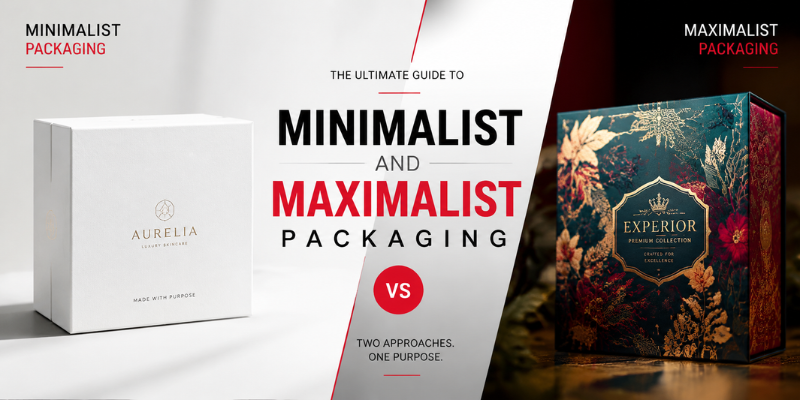
In a crowded marketplace, how a product is presented can shape consumer decisions before the first use. Packaging is no longer just a protective shell it is a strategic tool for branding, marketing, and consumer engagement. Two dominant approaches minimalist packaging and maximalist packaging represent opposite philosophies in design, communication, and psychology. Understanding their differences, benefits, and strategic applications is critical for brands aiming to optimize their branding and packaging strategy.
What is Minimalist Packaging?
Minimalist packaging emphasizes simplicity, clarity, and essentialism. Its hallmark is restrained design, limited color palettes, concise typography, and the use of negative space. The philosophy behind minimalism is “less is more,” focusing on communicating a product’s core identity without distraction.
Examples in practice:
- Apple: Known for sleek, white, unadorned boxes that reflect sophistication and brand confidence.
- Aesop skincare products: Uniform amber bottles with minimal labeling, conveying premium quality.
- Muji: Neutral-toned packaging highlighting functionality rather than branding flamboyance.
Benefits of minimalist packaging:
- Consumer clarity: Streamlined visuals reduce cognitive overload, helping consumers quickly grasp product identity.
- Luxury perception: Minimalist design often conveys exclusivity, elegance, and refined taste.
- Cost efficiency: Limited printing and embellishments can reduce production costs.
- Sustainability alignment: Less material and ink usage aligns with growing sustainable packaging trends.
From a product packaging psychology perspective, minimalist packaging appeals to modern consumers seeking authenticity, functional aesthetics, and environmentally conscious brands.
What is Maximalist Packaging?
Maximalist packaging, in contrast, thrives on abundance, visual complexity, and storytelling. It utilizes vibrant colors, bold typography, intricate patterns, and sometimes elaborate finishes like foiling, embossing, or holographic effects. The goal is to create a sensory-rich experience that attracts attention and communicates brand narrative.
Examples in practice:
- Fenty Beauty: Bold color schemes and striking visuals reinforce brand personality and inclusivity.
- Lush Cosmetics: Colorful, illustrated packaging emphasizes playfulness and natural ingredients.
- Sugarfina candies: Decorative boxes with lavish typography and motifs create a sense of indulgence.
Benefits of maximalist packaging:
- Shelf impact: Highly visible designs capture attention in competitive retail spaces.
- Brand storytelling: Elaborate visuals allow narrative exploration, appealing to consumers’ emotions.
- Memorability: Intricate, unique designs enhance recall and encourage social sharing.
- Luxury appeal through extravagance: Complexity can signal premium craftsmanship and indulgence.
From a consumer perception of packaging standpoint, maximalist designs can stimulate excitement, curiosity, and desire, often suited for products positioned as gifts, collectibles, or lifestyle indulgences.
Psychological Impact on Consumers
Packaging profoundly influences consumer behavior. Minimalist designs leverage the principle of cognitive fluency: easy-to-process visuals foster trust and positive evaluation. Conversely, maximalist designs exploit arousal and attention mechanisms, stimulating excitement and engagement.
Research in product packaging psychology indicates:
- Minimalism appeals to consumers seeking calm, reliability, and rational decision-making.
- Maximalism resonates with impulse-driven, experience-seeking consumers.
- Both strategies can enhance perceived value if aligned with brand positioning and product expectations.
Branding and Marketing Perspective
From a branding viewpoint, packaging is an extension of identity.
- Minimalist packaging supports brands aiming for timelessness, professionalism, and understated prestige. For instance, Apple’s packaging reinforces a luxury packaging design vs simple packaging dichotomy, signaling sophistication.
- Maximalist packaging enables vibrant storytelling, social media shareability, and emotional resonance. Brands like Fenty Beauty and Sugarfina leverage it to differentiate themselves in saturated markets.
Marketing experts highlight that packaging must be coherent with the brand promise. Mismatched design—minimalist packaging for a playful product or maximalist packaging for functional tech—can confuse consumers and reduce trust.
Sustainability Impact
Sustainability is increasingly integral to packaging strategy:
- Minimalist packaging naturally aligns with eco-conscious principles: reduced material usage, simple inks, and smaller production footprints.
- Maximalist packaging may require heavier materials, specialized finishes, or additional layers, potentially increasing environmental impact.
However, innovative solutions—like recyclable inks, biodegradable coatings, and sustainable packaging trends—allow maximalist designs to mitigate environmental concerns while maintaining visual richness.
Material Comparison Minimalist vs Maximalist Packaging
| Material | Minimalist Packaging | Maximalist Packaging | Notes / Insights |
|---|---|---|---|
| Paperboard / Cardstock | Often uncoated, plain, neutral tones | Can be coated, textured, or embossed | Versatile, low-cost; suitable for both, finish drives style |
| Corrugated / Kraft | Simple, eco-friendly brown or white | Printed with patterns, foils, or vivid colors | Minimalism uses natural texture; maximalism leverages prints for visual impact |
| Rigid / Luxury Board | Clean, single-color with matte or soft-touch finish | Decorated with metallic foils, embossing, or glossy textures | Supports premium look; maximalist packaging uses embellishments for opulence |
| Plastics / PET / PVC | Transparent windows for minimal labels | Holographic films, bright colors, or multi-layered designs | Minimalism emphasizes clarity; maximalism uses films for showiness |
| Inks & Finishes | Limited, subtle colors; water-based or soy inks | Vibrant, multiple inks; metallic, spot UV, or foil stamping | Minimalist inks convey simplicity; maximalist inks enhance attention and luxury feel |
| Textiles / Ribbon / Embellishments | Rarely used, kept functional | Frequent use for decorative appeal | Maximalist packaging often adds sensory and tactile luxury elements |
Industry Trends and Future Outlook
Industry analysis suggests a convergence rather than polarization:
- Hybrid approaches are emerging, combining minimalist structural design with selective maximalist elements (e.g., simple box with metallic accents).
- Personalization trends are pushing both minimalist and maximalist packaging toward consumer-specific experiences.
- Digital-first packaging previews allow brands to test visual impact virtually, enhancing decision-making and ROI.
Experts forecast that packaging will increasingly balance aesthetics, functionality, sustainability, and emotional engagement, leveraging data-driven insights on consumer perception of packaging.
Case Studies
Apple vs Fenty Beauty
Apple’s white minimalist boxes enhance perceived sophistication and align with its high-tech, premium identity. Fenty Beauty’s maximalist packaging creates excitement and inclusivity, reinforcing the brand narrative of bold self-expression.
Muji vs Lush Cosmetics
Muji’s stripped-back packaging communicates functionality and affordability. Lush uses hand-drawn, colorful, and playful designs to invoke sensory appeal and sustainability messaging simultaneously.
Sugarfina Candies
Maximalist, gift-oriented packaging elevates perceived value, driving impulse purchases and repeat gifting behavior.
Conclusion
The debate between minimalist and maximalist packaging is not about superiority but strategic alignment. Minimalist packaging excels in clarity, trust, and eco-conscious appeal, whereas maximalist packaging shines in attention, narrative richness, and indulgence.
Brands must evaluate:
- Target audience preferences
- Product positioning
- Marketing objectives
- Sustainability goals
The most effective packaging strategies often blend minimalism and maximalism thoughtfully, creating designs that are visually compelling, psychologically resonant, and environmentally responsible. A holistic approach, informed by insights from branding strategists, consumer psychologists, and sustainability experts, ensures packaging not only protects products but also drives consumer engagement, brand loyalty, and market success, as exemplified by BoxesGen’s innovative packaging solutions.
FAQ
What factors should brands consider when choosing between minimalist and maximalist packaging?
Brands should evaluate their target audience, product type, brand identity, marketing goals, and sustainability objectives. Minimalist packaging works best for premium, functional, and eco-conscious products, while maximalist packaging is ideal for gift items, collectibles, and products needing high shelf impact.
How does packaging style influence consumer behavior?
Packaging affects perception, emotional engagement, and purchase decisions. Minimalist designs evoke trust, clarity, and sophistication, whereas maximalist designs stimulate excitement, curiosity, and indulgence, guiding consumers’ psychological responses and buying impulses.
Can minimalist packaging still convey luxury or premium value?
Yes, minimalism can communicate luxury through simplicity, high-quality materials, restrained typography, and thoughtful design. Iconic brands like Apple and Aesop demonstrate that elegance and exclusivity do not require elaborate visuals.
Is maximalist packaging environmentally sustainable?
While maximalist designs often use more materials and complex finishes, they can be made sustainable using recyclable materials, eco-friendly inks, biodegradable coatings, and thoughtful design practices that reduce waste while retaining visual appeal.
Are hybrid approaches combining minimalism and maximalism effective?
Absolutely. Many brands now blend minimalist structure with selective maximalist accents, balancing clarity and attention-grabbing elements. This strategy maintains brand elegance, engages consumers, and meets sustainability goals simultaneously.
 Facebook
 Twitter
 LinkedIn
 Pinterest