
 Apparel Boxes
 Soap Boxes
 Candle Boxes
 Bakery Boxes
 Cosmetic Boxes
 Cardboard Boxes
 Vape Boxes
 Pillow Boxes
 CBD Boxes
 Cigarette Boxes
 Hair Extension Boxes
 Retail Boxes
 Hemp Boxes
 Display Boxes
 Jewelry Boxes
 Food Boxes
 Die Cut Boxes
 Toy Boxes
 Window Boxes
 Corrugated Boxes
 Kraft Boxes
 Rigid Boxes
 Mailer Boxes
 Mylar Bags
 Gift Boxes
 Seasonal Boxes
 Custom Labels
 Custom Sticker
 Sport Boxes
 Foldable Boxes
 Gable Boxes
 Insert Boxes
 Sleeve Boxes
 Tuck Boxes
 Tin Packaging
 Tube Packaging
 Small Boxes

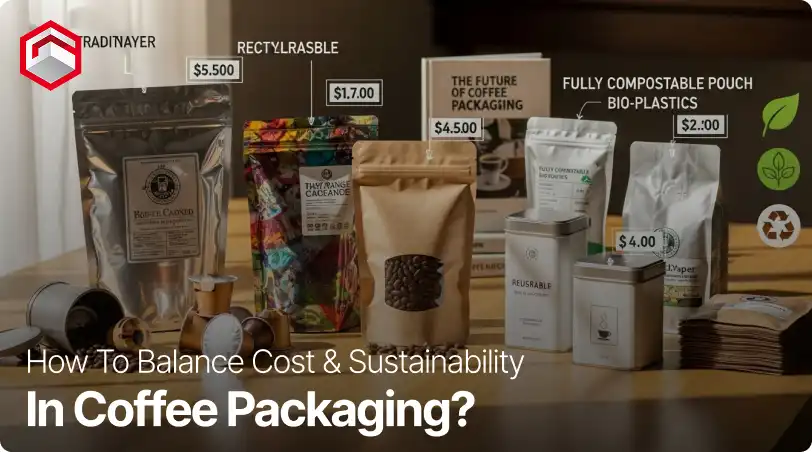
As we all know, the sustainable and eco-friendly packaging trend is rising day by day; this rising trend has shifted different companies towards sustainable packaging options. Shifting towards sustainable and eco-friendly packaging is a good step towards a greener environment and making the planet worth living on. With the rise of sustainable material demand, this material is becoming less available and more costly with the passage of time. Now every industry and company is looking for strategies to incorporate sustainability in coffee packaging without compromising on the cost. This blog features different sustainable materials, their perks over traditional packaging, and the strategies to balance cost and sustainability.
Why Does The Balance Of Cost And Sustainability Matter?
To compete in the highly active coffee industry, coming up with eco-friendly and cost-effective packaging is essential, but this sustainable packaging is becoming more cost-competitive in comparison to traditional packaging, so both of these points are worth considering, as not going after recyclable, compostable, or eco packaging results in lower brand engagement and high packaging costs that eat into your cost margins. So, keeping a balance between low cost to make your margin healthy and environmentally friendly packaging is a must-have
Common Eco-Friendly Materials
Instead of going with traditional packaging and risking your brand, you can go for materials that are not only sustainable but also cost-effective, meeting the demands every business is looking for. The list of materials is
Recyclable Packaging Materials
These recyclable packaging materials are made from polyethylene or polypropylene, which are generally plastic types, but are cheap and recyclable, not contributing to landfills, dumps, and ocean pollution. These materials are generally monotype and consist of a single material instead of a plastic and aluminium mixture. Businesses can choose these to go for sustainable and recyclable packaging at an effective cost.
Compostable Packaging Materials
These are generally made from natural and renewable materials that can be decomposed easily. These materials generally take 90 to 180 days, in comparison to traditional packaging that takes years or centuries. These materials generally include polylactic acid, polyhydroxyalkanoates, cellulose films, kraft paper, and starch-based films and are highly plant-based. Initially, they are costly, but they contribute to zero waste.
Biobased Plastic Materials
These are the polymers produced wholly or partly from renewable biomass instead of fossil fuels. With the industry shift, biobased plastic materials are used for sustainable materials and have a major role in a greener planet. These are derived from plants, corn, sugarcane, or even algae. These materials combine higher cost with sustainability and eco-friendliness, making them a popular choice for coffee, food, or retail. These materials have the same protective properties as traditional plastics
Paper-Based Packaging Materials
These materials have become a cornerstone of sustainable packaging and are derived from renewable wood pulp, being recyclable, biodegradable, and lightweight, and make one of the most responsible choices for food and coffee brands. These materials generally include kraft paper, paperboard, corrugated cardboard, molded fibre and pulp packaging, and coated laminated paper, which provides better protection for coffee beans while being eco-friendly and cost-effective.
Challenges Of Sustainable Packaging
To reduce or lower environmental impact, switching to sustainable packaging is crucial, but with advantages, it also comes with disadvantages.
Higher Costs
Eco-friendly materials are usually more costly due to limited suppliers and scaling issues, making small businesses struggle to keep up with the trends.
Limited Material Availability
As these materials are not in consistent supply, businesses are facing difficulty in material availability and in sourcing in bulk.
Performance Limitations
These materials generally have lower barrier protection against moisture, oxygen, or light, which results in reduced durability and shorter shelf life, usually leading to spoilage and damage.
Recycling And Waste Infrastructure
Many regions lack recycling or composting facilities and often end up in landfills due to poor sorting, and may not break down without industrial composting environments.
Supply Chain Challenges
Auditing, verification, and logistics increase complexity and cost and require working with new suppliers and materials.
Innovations Or Strategies To Ensure Lower Cost And Boost Sustainability
Balancing both cost efficiency and environmental responsibility in packaging requires smart designs, material innovation, and process optimisation. Some strategies to cope with the situation are
Lightweight And Minimal Designs
Going for sustainable materials is important, but if you want to reduce cost, make strategies to generally adapt packaging that has lightweight, reduced layers, and thinner films. And make sure there is no excess waste, and cut production. Besides this, use minimal designs that not only give an innovative vibe to your packaging but also reduce energy consumption for printing and lower inks cost. An example of this type of packaging is flat pouches instead of jars.
Switching To Monomaterial Packaging
Instead of going for composite materials that have multi-layers and require more energy, complex process, and specific machinery to recycle, go for mono-layered materials that are easy to recycle and require no extra energy, machinery, and process, which offer big margins in cost.
Using Recycled And Post-Consumer Materials
Incorporate post-consumer recycled content in packaging films or cartons that result in lower raw materials cost and support circular economy goals. Besides this, rescuing waste spillage in landfills also offers cost-effectiveness. For this, you can adapt corrugated boxes, mailers, and flexible films.
Digital Printing And On-Demand Production
By shifting from bulk printing to digital printing, you can cut the cost as it requires a short run and has a lower cost per unit. Besides this, avoid bulk formation of boxes for backup and go fro on on-demand orders, making short-run printing workable for custom orders and also by lowering the minimum order quantity.
Local Sourcing And Shorter Supply Chains
Search for local suppliers and collaborate with them to lower the transportation cost and order in bulk or wholesale, so that you can get wholesale discounts and cost-effective materials. Improves leads to regularized order shipping that results in lower international freight dependency, and also offers refillable packaging to reduce the production rate
Conclusion
Balancing cost and sustainability means finding the intersection where both meet. When you choose materials carefully, make your strategies to deal with business, adapt innovations towards lower costs, boost sustainability, and go through the full lifecycle of your packaging, you will deliver an economical solution, brand-aligned and environmentally responsible.
 Facebook
 Twitter
 LinkedIn
 Pinterest