
 Apparel Boxes
 Soap Boxes
 Candle Boxes
 Bakery Boxes
 Cosmetic Boxes
 Cardboard Boxes
 Vape Boxes
 Pillow Boxes
 CBD Boxes
 Cigarette Boxes
 Hair Extension Boxes
 Retail Boxes
 Hemp Boxes
 Display Boxes
 Jewelry Boxes
 Food Boxes
 Die Cut Boxes
 Toy Boxes
 Window Boxes
 Corrugated Boxes
 Kraft Boxes
 Rigid Boxes
 Mailer Boxes
 Mylar Bags
 Gift Boxes
 Seasonal Boxes
 Custom Labels
 Custom Sticker
 Sport Boxes
 Foldable Boxes
 Gable Boxes
 Insert Boxes
 Sleeve Boxes
 Tuck Boxes
 Tin Packaging
 Tube Packaging
 Small Boxes

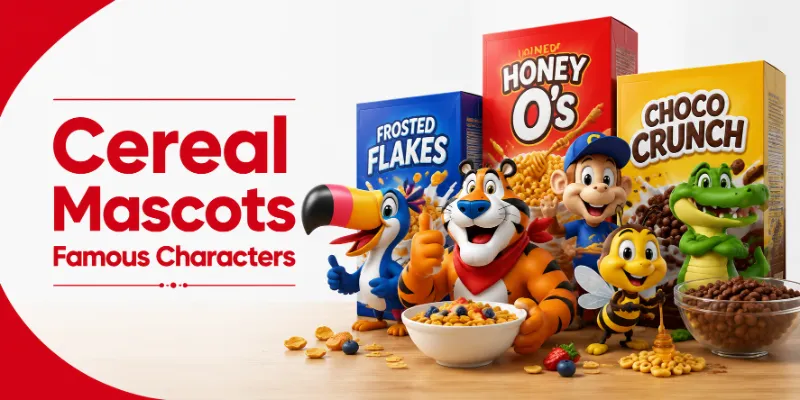
Few things bring back childhood mornings like cereal mascots. A tiger flexing on a box, a rabbit chasing fruity rings, or a captain steering his ship across a bowl of crunchy squares. These characters were often the first thing kids noticed on a grocery shelf, and many are still instantly recognizable.
Cereal mascots do more than sell breakfast. They build a personality around a brand, create familiarity, and turn a simple box into something children ask for by name. For packaging designers and cereal companies, they show how powerful good visual storytelling can be.
What Are Cereal Mascots?
Cereal mascots are the illustrated or animated characters that represent a cereal brand, usually appearing on the box front, in commercials, and across other marketing materials. These characters serve several practical purposes:
- Brand recognition: a familiar face helps shoppers spot a product on a crowded shelf.
- Advertising: mascots give commercials a consistent character to follow for years.
- Product personality: a cheerful bee or silly rabbit gives a cereal a distinct tone.
- Communication with families: mascots speak to young audiences while still appealing to buying adults.
- Packaging design: the character often becomes the visual anchor of the box.
Because of these roles, mascots are treated as long-term brand assets rather than short-lived advertising gimmicks.
The History and Evolution of Cereal Mascots
Cereal mascots have been part of American breakfast tables for close to a century. In the early twentieth century, cereal companies began adding simple illustrations to packaging to catch shoppers’ eyes. Quaker Oats is often cited as an early example, with its illustrated figure appearing on packaging as far back as the late 1800s. The 1950s marked a turning point, as TVs became common in American homes and cereal brands realized they could bring mascots to life through commercials. Tony the Tiger was created for Kellogg’s Frosted Flakes in 1951 and appeared on packaging when the cereal launched in 1952, right as TV advertising was becoming a major marketing tool.
Snap, Crackle and Pop had already represented Kellogg’s Rice Krispies since 1933, but television gave them and newer characters a livelier presence. Toucan Sam and Cap’n Crunch both arrived in 1963, followed by Lucky the Leprechaun in 1964. As mascots grew popular, cereal boxes evolved from simple text-based designs into colorful, character-driven packaging that acted as advertising in its own right. More recently, mascots have moved into social media, mobile games, and online video, with some brands modernizing their designs while others keep a nostalgic look for the adults who grew up with them.
Why the 1990s Became a Memorable Era for Cereal Characters
For many adults, the 1990s feel like the golden decade of cereal mascots. This was not the nineteenth century by any stretch; it was a modern era shaped by cable television, Saturday morning cartoons, and boxes that competed hard for a child’s attention.
A few things made this decade stand out colorful, bold packaging with larger-than-life mascot illustrations, frequent commercials during Saturday morning cartoons, promotional toys and trading cards inside the box, games and puzzles printed on the back panel, and collectable packaging tied to movies or cartoons. This mix of visuals, entertainment, and small rewards is why so many people associate the 1990s with their favorite childhood cereal characters.
Famous Cereal Mascots People Still Remember
Tony the Tiger, mascot of Kellogg’s Frosted Flakes, is known for his deep voice, orange and black stripes, and red neckerchief.
Toucan Sam represents Kellogg’s Froot Loops. His rainbow-striped beak matches the cereal’s fruity colors, and he is traditionally shown following his nose to the flavor.
Trix Rabbit, a General Mills character, is known for his repeated, unsuccessful attempts to get a bowl of Trix, always ending with the reminder that the cereal is for kids.
Cap’n Crunch, officially Captain Horatio Magellan Crunch, gives his Quaker Oats cereal an adventurous, nautical identity through his naval-style uniform.
Lucky the Leprechaun represents General Mills’ Lucky Charms, a small, cheerful character tied to the cereal’s marshmallow shapes.
Count Chocula, introduced by General Mills in 1971 as part of its monster-themed line, is a friendly vampire character representing the chocolate-flavored cereal.
Snap, Crackle and Pop have represented Kellogg’s Rice Krispies since 1933, one of the longest-running mascot trios in cereal history.
Buzz the Bee represents Honey Nut Cheerios, a cheerful bee tied to the cereal’s honey flavor.
Sonny the Cuckoo Bird, of General Mills’ Cocoa Puffs, is known for losing his composure whenever chocolate cereal is mentioned.
Dig’em Frog represents Kellogg’s Honey Smacks, shown wearing sunglasses with a confident, laid-back grin.
Popular Cereal Mascot Names and Their Brand Identities
A mascot’s name, look, and personality work together to make a cereal memorable.
| Mascot Name | Cereal Brand | Personality or Quality | Visual Identity |
|---|---|---|---|
| Tony the Tiger | Frosted Flakes | Confident, energetic | Orange tiger with red neckerchief |
| Toucan Sam | Froot Loops | Curious, friendly | Multicolored toucan with striped beak |
| Trix Rabbit | Trix | Playful, persistent | White rabbit in purple sweater |
| Cap’n Crunch | Cap’n Crunch | Adventurous, jovial | Naval captain in blue uniform |
| Lucky the Leprechaun | Lucky Charms | Cheerful, mischievous | Small green-clad leprechaun |
| Count Chocula | Count Chocula | Dramatic, friendly | Cartoon vampire in a cape |
| Snap, Crackle and Pop | Rice Krispies | Lively, cheerful | Elf-like trio in chef hats |
| Buzz the Bee | Honey Nut Cheerios | Warm, approachable | Yellow bee with rounded features |
This consistency between name, personality, and appearance is a big part of why these characters have stayed recognizable for decades.
Are There Female Cereal Mascots?
Compared to the long list of male cereal characters, female mascots have historically been rare. Most well-known characters from the mid-twentieth century, including Tony the Tiger, Toucan Sam, and Cap’n Crunch, were male.
There are a few verified exceptions. Katy the Kangaroo was tested by Kellogg’s in the early 1950s before Tony the Tiger became the official Frosted Flakes mascot, and Pebbles Flintstone has appeared on limited edition Fruity Pebbles packaging beside her father, Fred. Beyond these, female representation has stayed limited, leaving room for brands to introduce more diverse characters.
From Cereal Boxes to Television, Toys and Costumes
Cereal mascots rarely stay confined to the box. Television commercials gave them voices and storylines, while digital games, toys included inside boxes, mascot-themed clothing, in-store events, and Halloween costumes have all kept popular characters visible outside the cereal aisle. Today, social media lets mascots interact with new generations, keeping older characters relevant and deepening the emotional connection people feel toward a brand.
Why Mascots Work So Well on Cereal Packaging
A well-designed mascot does several jobs on a package. It improves shelf recognition, helping a shopper’s eyes land on a familiar box among competitors, and adds emotional appeal through a sense of nostalgia that makes a product feel approachable. Consistent use over time builds brand recall, the way Tony the Tiger and Frosted Flakes have stayed paired for decades, and a strong character brings colorful presentation and storytelling that plain text alone cannot achieve, while supporting clearer communication with the target audience.
Creating Custom Cereal Boxes With Mascot Artwork
The lessons from decades of cereal mascot history apply directly to how new cereal brands approach packaging today. A strong, original character can help a smaller brand build the recognition that legacy mascots earned over generations.
Custom cereal boxes bring mascot artwork, logos, colors, and product details together in one design. Brands are encouraged to use original mascots or properly licensed characters, rather than copying existing trademarked artwork. Useful packaging options include custom sizes and shapes, food-grade cardboard or recyclable kraft material, full-colour printing, matte or gloss lamination, spot UV or foil stamping for design details, die-cut windows, and product inserts or QR codes for promotional games.
How Mascot Packaging Supports Brand Recognition
A great mascot only builds strong recognition when used consistently across packaging, websites, advertisements, retail displays, and social media. That consistency builds trust over time, much like longtime fans associate Tony the Tiger or Cap’n Crunch with a specific flavor and quality. For newer brands, this starts with a clear, well-designed mascot and packaging that reflects that character accurately from day one.
Why Choose BoxesGen for Custom Cereal Packaging?
At BoxesGen, we help cereal brands turn mascot ideas into packaging that gets noticed on the shelf. We offer custom dimensions, original printing, and support choosing materials like food-grade cardboard or recyclable kraft, along with branding support, bulk ordering, careful quality control, competitive pricing, responsive customer support, and reliable shipping.
Final Thoughts
Cereal mascots have shaped breakfast culture for close to a century, turning simple boxes into characters people remember well into adulthood. From Tony the Tiger’s confident roar to Toucan Sam’s colorful beak, these mascots show how strong character design builds lasting brand loyalty. The same principle applies to any cereal brand today.
Thoughtful mascot design, paired with well-made custom packaging, can help a product stand out and build recognition that lasts for years. If you are working on a cereal brand and want packaging that reflects your character and story, we would be glad to help. Reach out anytime for a custom packaging quote.
FAQs
What is the most famous cereal mascot?
Tony the Tiger is widely considered the most famous cereal mascot. He has represented Kellogg’s Frosted Flakes since the early 1950s and remains one of the most recognized advertising characters in the world, known for his confident personality and signature catchphrase.
Why do cereal companies use mascots?
Cereal companies use mascots to build brand recognition, create an emotional connection with customers, and give products a distinct personality. A memorable character helps a cereal stand out on crowded shelves and makes advertising more engaging for children and families.
Which cereal mascots were popular in the 1990s?
Characters like Tony the Tiger, Toucan Sam, Cap’n Crunch, Trix Rabbit, and Count Chocula were all popular during the 1990s. The decade is remembered for colorful packaging, frequent commercials, and cereal boxes that included toys, games, and collectable designs.
Can a new cereal brand create its own mascot?
Yes, any cereal brand can create an original mascot to represent its product. A well-designed character, paired with consistent packaging and marketing, can help a new brand build recognition over time, much like established cereal companies have done for decades.
Can mascot artwork be printed on custom cereal boxes?
Yes, original mascot artwork can be printed on custom cereal boxes using full-colour printing, foil stamping, and other finishing options. Brands should use their own original characters or properly licensed artwork to avoid using trademarked mascots without permission.
 Facebook
 Twitter
 LinkedIn
 Pinterest