 Apparel Boxes
 Soap Boxes
 Candle Boxes
 Bakery Boxes
 Cosmetic Boxes
 Cardboard Boxes
 Vape Boxes
 Pillow Boxes
 CBD Boxes
 Cigarette Boxes
 Hair Extension Boxes
 Retail Boxes
 Hemp Boxes
 Display Boxes
 Jewelry Boxes
 Food Boxes
 Die Cut Boxes
 Toy Boxes
 Window Boxes
 Corrugated Boxes
 Kraft Boxes
 Rigid Boxes
 Mailer Boxes
 Mylar Bags
 Gift Boxes
 Seasonal Boxes
 Custom Labels
 Custom Sticker
 Sport Boxes
 Foldable Boxes
 Gable Boxes
 Insert Boxes
 Sleeve Boxes
 Tuck Boxes
 Tin Packaging
 Tube Packaging
 Small Boxes

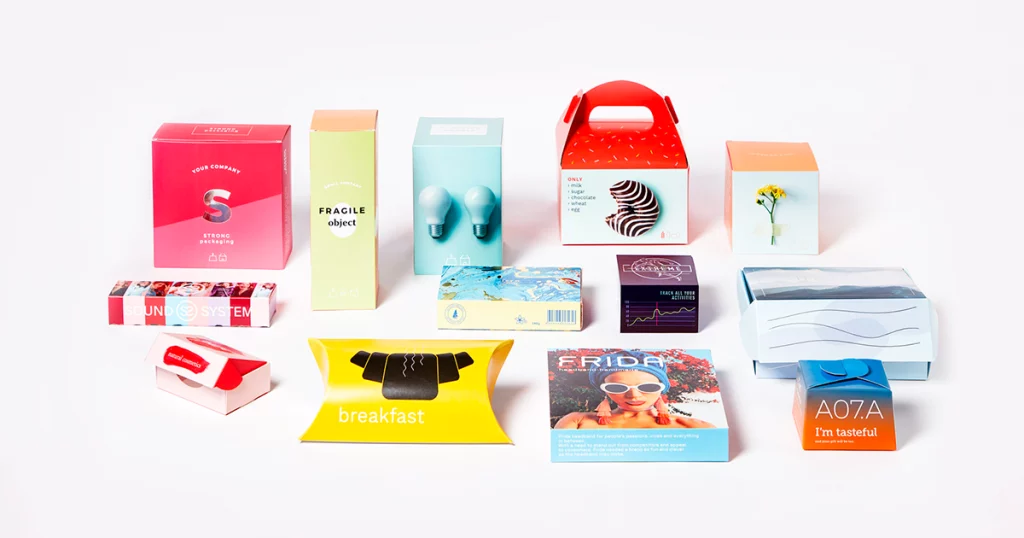
Your packaging is the first physical thing a customer touches. Before they open a product, before they read a label, and long before they decide whether to buy again, the box tells a story. For small businesses, that story can be the difference between a forgettable transaction and a relationship worth keeping.
Custom boxes for small businesses deliver tangible, measurable advantages that includes stronger brand identity, better product protection, improved customer experience, and a genuine marketing channel that keeps working after the sale. In 2026, packaging is no longer a logistical afterthought. It is a strategic asset.
What Are Custom Boxes for Small Businesses?
Custom boxes are packaging solutions designed specifically around your brand, products, and customers. Unlike plain brown stock boxes or generic poly mailers, custom boxes carry your colors, logo, messaging, and structural design. They can be tailored to exact product dimensions, printed with full-color artwork, and finished with premium effects like embossing, foil stamping, or soft-touch laminate.
The key categories include custom shipping boxes (for ecommerce and fulfillment), custom retail packaging (for shelf display), custom mailer boxes (for subscription products and DTC brands), and custom product boxes (for individual product presentation). Each serves different purposes but shares the same core advantage: they communicate professionalism and brand identity at every touchpoint.
Why Packaging Matters More Than Ever in 2026
Ecommerce competition is fiercer than ever. Small businesses can no longer rely on proximity or limited local options. Customers compare products across dozens of retailers before purchasing. The ones who win are often the ones who create a memorable experience, and packaging is the most tangible part of that experience.
There is also a trust dimension. Research by Ipsos found that nearly 7 in 10 consumers say packaging design influences their purchasing decision. For small businesses trying to establish credibility against larger competitors, a professionally designed box communicates quality before the product is even seen.
Sustainable packaging concerns have also accelerated the shift toward custom solutions. Customers increasingly scrutinize environmental choices, and custom packaging allows small businesses to choose materials and messaging that align with their values, and communicate that commitment clearly.
Top Benefits of Custom Boxes for Small Businesses
Stronger Brand Recognition
Every package you ship or sell is a branded impression. Custom boxes turn ordinary deliveries into mobile billboards. When your box moves through a postal facility, sits on a doorstep, or gets photographed for an unboxing video, it carries your logo, your colors, and your personality into places a paid ad cannot reach. Consistent visual branding across packaging, inserts, and labels builds the kind of recognition that compounds over time.
Improved Customer Experience
The unboxing experience is a real and measurable phenomenon. YouTube unboxing videos have accumulated billions of views. Instagram is full of aesthetically photographed deliveries. This is not accidental, people genuinely enjoy opening well-packaged products. It triggers anticipation, reinforces the value of their purchase, and creates an emotional connection with the brand.
Custom packaging allows you to engineer that experience intentionally. Tissue paper in brand colors, a personalized thank-you note, a clean internal layout that presents the product beautifully
Better Product Protection
Damaged products cost money in three ways: replacement inventory, shipping costs for returns, and lost customer trust. Custom boxes sized precisely to your products reduce movement inside packaging, eliminating the need for excessive void fill while ensuring products survive transit intact.
A box that fits your product does more protective work than a generic box with filler stuffed around it. Corrugated custom boxes, in particular, can be engineered with specific flute configurations (B-flute for retail, C-flute for heavier items, E-flute for cosmetics and electronics) to balance protection and weight. This reduces damage rates, lowers return rates, and improves customer reviews.
Increased Customer Loyalty
Customers do not return simply because a product is good. They return because the entire experience purchase, shipping, arrival, and use, was worth repeating. Packaging sits at the center of the post-purchase experience, and it has a measurable effect on loyalty.
Branded packaging creates a sense of brand membership. When customers recognize your box instantly, feel the quality of the materials, and enjoy the unboxing ritual, they associate those positive feelings with your brand.
Higher Perceived Product Value
Packaging is a powerful signal of product quality. Custom boxes allow you to present your product at its best. A premium rigid box with magnetic closure communicates luxury. A clean kraft box with minimalist printing communicates artisan quality. Matching your packaging aesthetic to your brand positioning shapes how customers perceive, and price-anchor, your product before they open it.
More Effective Marketing
Every piece of custom packaging is a marketing asset. The outside carries your logo and brand story. The inside can carry promotional materials, QR codes linking to product tutorials, referral codes, loyalty program information, or social media calls to action. Packaging is a channel you already own and have already paid for, it simply needs to be used intelligently.
Better Ecommerce Performance
For online stores, packaging is the primary physical brand interaction. There is no store environment, no salesperson, no in-person experience, just the product arriving in a box. Custom shipping boxes communicate that the brand is real, invested, and cares about the customer’s experience.
Better packaging also directly affects ecommerce metrics. Lower damage rates reduce return processing costs and negative reviews. A positive unboxing experience increases the likelihood of a five-star review. And customers who photograph and share their delivery create organic social proof worth more than paid advertising.
Amazon sellers have reported significant review score improvements after switching to custom packaging, the visual presentation signals a premium product even before the customer engages with the item itself.
Improved Social Media Exposure
Unboxing content is one of the most organically shareable categories on social media. When customers photograph or video your packaging, they create content about your brand that reaches their followers, typically people with similar interests and purchase intent. This is earned media free, trusted, and targeted.
Sustainable Brand Positioning
Environmental responsibility is no longer optional for consumer-facing brands. For small businesses, sustainable custom packaging is both a values statement and a competitive differentiator.
Custom packaging gives you explicit control over materials and messaging. You can choose FSC-certified kraft board, soy-based inks, water-based coatings, and compostable void fill, and then communicate those choices directly on the box. Phrases like ‘This box is 100% recycled and recyclable’ printed on the packaging reinforce your brand values at the exact moment of customer interaction.
Long-Term Cost Savings
Custom packaging is more expensive per unit than stock packaging at low volumes, but that changes quickly with scale, and the indirect cost savings often more than compensate from day one.
Custom packaging boxes also reduce void fill costs (no need for air pillows or foam peanuts), reduce product damage rates (fewer replacement costs), and can be designed to flat-pack efficiently (reducing warehouse storage costs). The total cost picture is more favorable than the unit price comparison suggests.
How Custom Packaging Helps Small Businesses Compete With Large Brands
Large brands have larger marketing budgets, more distribution channels, and deeper customer recognition. What they do not have is agility. A Fortune 500 company cannot easily personalize packaging for a seasonal campaign, change a design in response to customer feedback, or include a handwritten note at scale.
Small businesses can do all of those things. And custom packaging is the arena where that agility creates genuine competitive advantage.
When a customer receives a beautifully packaged product from a small brand, they do not experience a ‘small business.’ They experience a professional, premium brand that respects their purchase. The psychological effect is equalization good packaging makes small businesses look and feel like established players in their category.
This matters especially in retail environments. On a shelf, a product in generic stock packaging next to a competitor’s well-designed custom box is already at a disadvantage , regardless of the actual product quality. Packaging is the first filter customers apply, and it happens unconsciously within seconds.
The Psychology Behind Branded Packaging
Packaging works on multiple psychological levels simultaneously. Understanding the mechanisms helps small businesses design packaging that is intentionally persuasive, not just aesthetically pleasing.
Color psychology plays a significant role. Green signals sustainability and health. Navy and black signal luxury. Bright colors signal energy and playfulness. Kraft tones signal artisan and natural. These associations are well-documented and predictable. Your packaging color palette is not just aesthetic, it is positioning.
How Custom Boxes Increase Repeat Purchases
Repeat purchases are the most profitable revenue a small business generates. Acquiring a new customer costs five to seven times more than retaining an existing one. Custom packaging directly supports retention by reinforcing brand identity and emotional connection after the sale.
The mechanism works like this: a customer receives a beautifully packaged product, photographs or shares it, has a positive emotional experience, and forms a stronger brand association than they would have from a plain box. When they need to repurchase, or when they encounter your brand again, the positive memory is already there. The decision friction is reduced.
Packaging inserts accelerate this effect. A discount code card for the next purchase creates a specific, immediate action path from the unboxing moment to the next transaction. Loyalty program invitations, referral codes, and product education materials all use the unboxing moment, maximum customer engagement, to deepen the relationship.
Best Packaging Materials for Small Businesses
Choosing the right packaging material depends on your product type, shipping method, price point, and sustainability goals. Here is a detailed breakdown of the most common options:
| Material | Durability | Cost | Sustainability | Best Use |
|---|---|---|---|---|
| Kraft Board | Medium | Low–Medium | Excellent (recycled, recyclable, biodegradable) | Artisan products, food packaging, eco brands, mailers |
| Cardboard (Paperboard) | Medium | Low–Medium | Good (recyclable, lightweight) | Retail boxes, cosmetics, small electronics, apparel |
| Corrugated Board | High | Medium | Good (recyclable, made from recycled content) | Shipping boxes, fragile items, heavy products, ecommerce |
| Rigid Board | Very High | High | Fair (heavier, less efficient to ship) | Luxury goods, premium gifts, high-end cosmetics, jewelry |
For most small businesses shipping physical goods, corrugated custom boxes offer the best balance of protection, cost, and printability. Kraft board is ideal for lightweight retail products and eco-positioned brands. Rigid boxes are worth the premium for luxury or gift-focused products where the packaging is part of the perceived value proposition.
Custom Printing and Branding Options
The printing method and finishing treatment you choose determines how your brand looks, feels, and is perceived. Each technique has different cost profiles, quality characteristics, and minimum order implications:
- Digital Printing: Ideal for short runs and fast turnaround. Full-color reproduction with no plate fees. Best for startups and test orders.
- Offset Printing: Better color accuracy and consistency at higher volumes. Requires printing plates (setup cost) but cost per unit drops significantly at scale.
- Screen Printing: Used primarily for fabric and certain rigid substrates. Bold, opaque colors. Limited to fewer colors per print.
- Embossing: Creates a raised 3D effect on paper surfaces. Adds tactile dimension and premium feel without ink. Excellent for logos and brand marks.
- Debossing: The inverse of embossing — creates an indented impression. Understated and elegant. Popular for minimalist luxury brands.
- Foil Stamping: Applies metallic or holographic foil through heat and pressure. Gold, silver, rose gold, and custom colors available. Signals prestige immediately.
- Spot UV: Applies a high-gloss coating to selected areas while keeping the rest matte. Creates dramatic contrast and draws the eye to specific design elements.
| Technique | Effect | Min. Order | Cost Level | Best For |
|---|---|---|---|---|
| Digital Print | Full-color photographic | Low (50+) | Low | Startups, varied SKUs, fast turnaround |
| Offset Print | Precise Pantone color | Medium (500+) | Medium (high volume = low/unit) | Established brands at scale |
| Screen Print | Bold, opaque solid color | Medium | Medium | Simple logos, bold graphics |
| Embossing | 3D raised texture | Medium | Medium–High | Logos, premium retail |
| Debossing | Indented impression | Medium | Medium–High | Minimalist luxury, understated brands |
| Foil Stamping | Metallic/holographic shimmer | Medium | High | Premium gifts, jewelry, beauty |
| Spot UV | Gloss-on-matte contrast | Medium | Medium–High | Accent elements, text highlights |
Ecommerce Packaging Benefits for Online Stores
For ecommerce businesses, custom packaging delivers specific operational and commercial benefits beyond branding. The physical journey a package takes from warehouse to doorstep creates multiple points where poor packaging loses money and good packaging makes it.
- Shipping Protection: Custom boxes made to your product dimensions reduce movement during transit. Less movement means fewer damaged products. Fewer damaged products mean fewer returns, fewer replacement shipments, and fewer one-star reviews citing packaging failures.
- Lower Damage Rates: Generic boxes force the use of excessive void fill like air pillows, packing peanuts, crumpled paper, that costs money, adds weight, and still allows product movement. A right-sized corrugated box with internal dividers or inserts eliminates this problem structurally.
- Better Reviews: The unboxing experience directly affects review scores. Multiple studies of Amazon seller data show that packaging quality mentions appear in a significant proportion of both positive and negative reviews. Customers who love the packaging say so. Customers frustrated by damaged, oversized, or flimsy packaging say that too.
- Reduced Returns: Damaged product returns are among the most expensive costs in ecommerce, typically $15 to $30 per unit when processing, reshipping, and inventory impact are included. Custom packaging with proper protection substantially reduces this cost center.
- Customer Retention: The first physical experience a new ecommerce customer has with your brand is opening the box. Make it excellent. A positive first-delivery experience is one of the highest-leverage moments for building a long-term customer relationship.
Sustainable Packaging Benefits for Small Businesses
Sustainability in packaging is no longer a niche concern, it is a mainstream purchasing criterion. Consumers, particularly Millennials and Gen Z, actively prefer brands that demonstrate environmental responsibility. For small businesses, sustainable custom packaging is a genuine point of differentiation.
Custom packaging gives you full control over the sustainability of your choices. You can specify recycled content percentages, FSC-certified paper sources, vegetable-based inks, water-based coatings, and recyclable or compostable materials. Unlike generic stock packaging where you take what is available, custom packaging lets you align materials with your brand values precisely.
The communication dimension matters as well. Custom boxes let you print sustainability credentials directly on the packaging, ‘Made from 100% post-consumer recycled content,’ ‘Printed with soy-based inks,’ ‘This box is fully recyclable.’ These statements are visible to customers, reinforce brand values, and reduce purchase guilt for environmentally conscious buyers.
There is a financial benefit as well. Lightweight packaging materials often cost less to ship than heavier alternatives. Eliminating plastic void fill and replacing with paper-based alternatives can reduce materials costs while improving environmental performance. Right-sizing packaging reduces both material use and dimensional weight shipping charges.
Common Packaging Mistakes Small Businesses Should Avoid
Most packaging errors fall into predictable patterns. Avoiding them saves money and protects brand reputation:
- Oversizing boxes: A product rattling in a box three times its size increases shipping costs, requires excess fill, and communicates poor attention to detail. Always match box dimensions to product dimensions with minimal clearance.
- Ignoring inside presentation: Many small businesses invest in beautiful exterior printing and neglect the interior. The inside of your box is the first thing the customer sees on opening, it should be as considered as the outside.
- Skipping structural testing: A beautiful box that arrives crushed is worse than a plain box that arrives intact. Always request samples and test your packaging under real shipping conditions before scaling.
- Poor typography choices: Small, low-contrast text is illegible on packaging. Logo marks should be vector files for crisp printing at any scale. Work with your supplier’s design team to ensure print-readiness.
- Inconsistent branding: Using different Pantone colors, logo versions, or design treatments across your packaging range creates a fragmented brand impression. Develop a packaging style guide and apply it consistently.
- Underestimating lead times: Custom packaging has production timelines, typically 10 to 21 business days for most orders. Running out of packaging mid-season forces a return to generic stock boxes, which disrupts brand consistency.
- Ignoring regulations: For food, cosmetic, and certain retail products, packaging must include specific regulatory information. Ensure compliance is built into your design, not retrofitted with stickers.
Packaging Trends Small Businesses Should Follow in 2026
- Eco-Friendly Packaging: The shift toward sustainable materials is accelerating. Brands that have not yet adopted recycled content, compostable options, or plastic-free alternatives are increasingly visible outliers. In 2026, sustainable packaging is expected, not exceptional.
- Minimalist Branding: Clean, restrained packaging design continues to outperform cluttered alternatives in consumer testing. White space, single-color printing, and elegant typography communicate confidence and modernity. Less visual noise also reduces printing costs.
- QR Code Packaging: QR codes on packaging bridge the physical and digital customer experience. They can link to product care instructions, brand stories, video content, loyalty programs, or reorder pages. A well-placed QR code turns a static box into an interactive touchpoint, and the engagement data it generates is highly valuable.
- Smart Packaging: NFC tags, augmented reality triggers, and temperature-sensitive inks are entering mainstream packaging for forward-thinking small businesses. Smart packaging creates interactive brand experiences that generic packaging simply cannot replicate.
- Personalized Packaging: Digital printing technology now allows variable data printing including different names, messages, or designs on individual boxes in the same production run. Subscription box companies and DTC brands are leading this trend, using personalized packaging to create moments of surprise and delight.
- Premium Unboxing Experiences: The unboxing experience as a deliberate design objective includes layered reveals, tissue paper, ribbon pulls, custom inserts, is becoming an expectation in premium product categories. Brands that invest in this theatre consistently outperform on social sharing metrics and customer satisfaction scores.
How to Choose the Right Custom Packaging Supplier
Selecting the right supplier is as important as the design itself. A supplier mismatch on quality, lead times, or minimum order quantities can derail even a well-conceived packaging strategy. Evaluate suppliers across these criteria:
- Minimum order quantities: Some suppliers require 1,000 units minimum, which is not feasible for early-stage small businesses. Look for suppliers, like BoxesGen, that offer low minimums without sacrificing print quality.
- Sample availability: Never commit to a full run without holding a physical sample. Color, material weight, and structural quality should all be assessed in person before production.
- Design support: Quality suppliers offer in-house design assistance or at minimum provide dieline templates for your designer. A supplier that only accepts ‘print-ready’ files and offers no support is not appropriate for most small businesses.
- Lead times: Standard production typically runs 4 to 6 business days. Rush services exist but carry premiums. Understand the timeline before your first order and plan inventory accordingly.
- Printing certifications: For sustainable packaging claims to be credible, your supplier should hold relevant certifications like FSC, SFI, or equivalent and use inks that meet food-safe or eco standards if applicable.
- Communication and responsiveness: Packaging projects involve proofs, revisions, and approvals. A supplier who is slow to communicate adds lead time and stress. Test responsiveness during the quote process.
- Reorder ease: Once your design is established, reordering should be frictionless. Ask whether files are stored on file, whether pricing is guaranteed for repeat orders, and how quickly reorders can be processed.
Why Thousands of Businesses Invest in Custom Packaging
The return on investment from custom packaging is rarely captured in a single metric, it flows through multiple channels simultaneously. Here is a direct comparison of generic versus custom packaging performance across key business dimensions:
| Factor | Generic Packaging | Custom Packaging |
|---|---|---|
| Branding | None — blank or stock design | Full brand identity, logo, colors, messaging |
| Product Protection | Generic sizing creates excess movement | Right-sized construction minimizes damage risk |
| Customer Experience | Transactional, forgettable | Memorable, shareable, emotionally resonant |
| Marketing Value | Zero — a cost center only | Active channel: inserts, QR codes, social triggers |
| Product Presentation | Product arrives ‘in a box’ | Product arrives as a brand experience |
| Repeat Purchases | No post-purchase brand reinforcement | Reinforces loyalty and provides repurchase prompts |
The ROI calculation for custom packaging should include: increased conversion from perceived quality, reduced returns from better protection, lower shipping costs from right-sizing, earned media from social sharing, and improved retention from better customer experience. Across these factors, most small businesses find custom packaging economically compelling well before they reach scale.
Your Packaging Is Your Brand in a Box
Custom boxes are not a luxury reserved for large brands with large budgets. They are a practical, measurable business investment that delivers returns across brand recognition, customer experience, product protection, social media exposure, and long-term customer loyalty.
In 2026, the packaging your products ship in communicates your brand’s seriousness, quality, and care for the customer as loudly as any advertising campaign. Generic stock packaging says ‘this is a transaction.’ Custom packaging says ‘this is a brand worth knowing.’
We was built specifically to make high-quality custom packaging accessible for small businesses. With low minimum order quantities, in-house design support, sustainable material options, and a full range of printing and finishing techniques, We gives growing brands the tools to show up professionally from day one.
If you are ready to turn your packaging into a competitive advantage, start with a sample order from here. See and feel the difference that custom-branded packaging makes, and then imagine how your customers will feel when they receive it.
Frequently Asked Questions
How much do custom boxes cost for small businesses?
Custom box pricing depends on material, size, print coverage, finish, and quantity. Digital printing on corrugated boxes can start from $1.50 to $4.00 per unit at 100-unit minimum orders. Pricing per unit decreases significantly at 500 and 1,000+ units. Premium finishes like foil stamping or embossing carry additional setup costs. BoxesGen offers transparent pricing and low minimums designed for growing small businesses.
What is the minimum order quantity for custom packaging?
Minimum order quantities vary by supplier and product type. Many digital printers offer minimums as low as 25 to 100 units for custom boxes. Offset-printed packaging typically requires 500 to 1,000 units minimum. BoxesGen specializes in small-business-friendly minimums that allow brands to test designs without large upfront commitments.
How long does it take to get custom boxes made?
Standard production lead times for custom boxes range from 4 to 6 business days, depending on the supplier, complexity, and whether revisions are needed at the proof stage. Rush options are often available with a premium. Add shipping time from the supplier when planning inventory.
Do I need a professional designer for custom packaging?
Not necessarily. Many custom packaging suppliers, including BoxesGen, offer in-house design support or provide dieline templates compatible with standard design software like Adobe Illustrator and Canva Pro. If your branding is established, a graphic designer can produce print-ready files efficiently. For first-time packaging projects, supplier design support is a valuable resource.
What types of custom boxes are available for small businesses?
The main categories include mailer boxes (self-locking, ideal for DTC and subscription), regular slotted containers (RSC, the classic shipping box), die-cut boxes (custom shapes for retail and gifting), rigid boxes (magnetic closure, luxury presentation), folding cartons (lightweight retail and cosmetics), and pillow boxes (specialty retail, ideal for accessories and gifts). Each serves different use cases, and most can be custom-printed with your branding.
Is custom packaging worth it for a small business just starting out?
Yes even at the earliest stage, custom packaging pays dividends in brand credibility, customer experience, and social media potential. Low minimum order quantities now make branded packaging accessible without large upfront investment. The psychological effect of professional packaging on first-impression and repeat purchase likelihood makes it one of the highest-ROI early investments a small business can make.
Can custom boxes be eco-friendly?
Absolutely. Custom boxes can be produced in recycled kraft board, FSC-certified paperboard, corrugated with high post-consumer recycled content, and printed with soy-based or water-based inks. Custom packaging actually enables stronger sustainability choices than stock packaging, because you control the specification entirely. Sustainable custom packaging can also be explicitly labeled on the box — communicating your environmental credentials at the customer touchpoint.
How does custom packaging affect product reviews?
Custom packaging has a measurable positive effect on online review scores. Products in professionally packaged boxes receive more five-star reviews that specifically mention the packaging. Conversely, damaged packaging and poor presentation generate negative reviews that persist on product listings. The packaging-to-review relationship is well-documented among ecommerce sellers, making it a practical quality lever, not just a branding consideration.
What is the best packaging for shipping fragile products?
For fragile products, double-wall corrugated boxes with internal suspension inserts, molded pulp trays, or foam inserts offer the strongest protection. The box should be sized to allow approximately 2 inches of cushioning material on all sides. Custom boxes designed specifically for your fragile product will always outperform generic stock alternatives because they can be engineered to the product’s exact dimensions and weight distribution.
How do I choose between different packaging materials?
Start with your product’s shipping requirements (weight, fragility, transit conditions), then layer in your brand positioning (premium, eco, artisan, bold), your price point (packaging cost as percentage of product value), and your volume (digital printing for low quantities, offset for scale). Corrugated is the workhorse for most small business shipping applications. Kraft board and folding carton work well for retail. Rigid boxes are reserved for premium products where packaging cost is justified by perceived value uplift.
 Facebook
 Twitter
 LinkedIn
 Pinterest