
 Apparel Boxes
 Soap Boxes
 Candle Boxes
 Bakery Boxes
 Cosmetic Boxes
 Cardboard Boxes
 Vape Boxes
 Pillow Boxes
 CBD Boxes
 Cigarette Boxes
 Hair Extension Boxes
 Retail Boxes
 Hemp Boxes
 Display Boxes
 Jewelry Boxes
 Food Boxes
 Die Cut Boxes
 Toy Boxes
 Window Boxes
 Corrugated Boxes
 Kraft Boxes
 Rigid Boxes
 Mailer Boxes
 Mylar Bags
 Gift Boxes
 Seasonal Boxes
 Custom Labels
 Custom Sticker
 Sport Boxes
 Foldable Boxes
 Gable Boxes
 Insert Boxes
 Sleeve Boxes
 Tuck Boxes
 Tin Packaging
 Tube Packaging
 Small Boxes

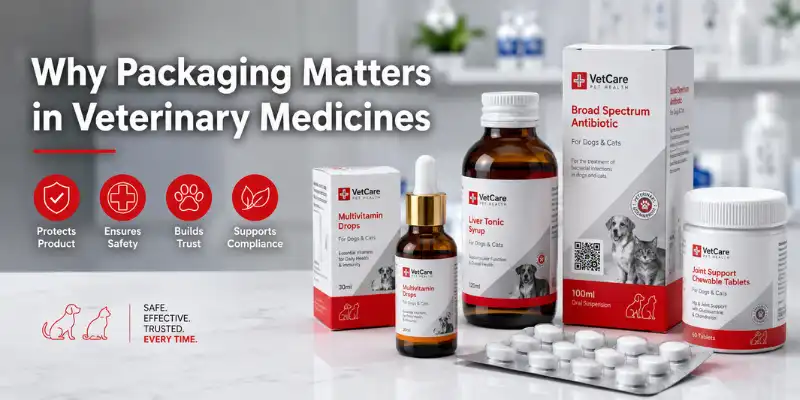
There’s a quiet but critical decision made long before a veterinary medicine reaches a clinic shelf, a pet owner’s hands, or an animal’s body. That decision is about packaging and in the world of veterinary pharmaceuticals, it shapes everything from product safety and regulatory compliance to brand trust and treatment outcomes. Many manufacturers focus intensely on what’s inside the box. But the box itself? That’s where the real work begins.
In the USA’s growing animal healthcare market valued at over $6 billion in veterinary pharmaceuticals alone packaging is no longer a secondary concern. It’s a frontline strategy. Whether you’re manufacturing prescription medications for livestock, over-the-counter flea treatments for household pets, or compounded therapies for exotic animals, the packaging you choose directly impacts product efficacy, legal standing, and how your brand is perceived in a competitive marketplace.
Let’s break down exactly why packaging matters in veterinary medicines and what getting it right actually looks like.
The Role Packaging Plays in Veterinary Medicine Quality
At its most fundamental level, pharmaceutical packaging for animals is a preservation system. Medications degrade. Light, moisture, oxygen, and temperature fluctuations are all enemies of chemical stability. Without the right barrier packaging, a perfectly formulated product can lose potency, develop contamination, or become outright dangerous before it ever reaches the patient.
For veterinary medicines specifically, this challenge is compounded. Products may be stored in barn environments, transported across varying climates, or sit on clinic shelves for extended periods. Packaging must account for all of this.
Glass vials, blister packs, HDPE bottles, and aluminum foil pouches are chosen with careful deliberation not at random. Each material offers specific protection profiles. A moisture-barrier pouch may be ideal for chewable tablets prone to humidity absorption, while an amber glass bottle is better suited for liquid antiparasitic compounds that degrade under UV exposure.
The bottom line: the packaging is the product’s first line of defense. When it fails, the medicine fails and with animals, that has real consequences.
Protecting Medicine Shelf Life From Production to Point of Care
Shelf life isn’t a fixed number stamped on a label. It’s a result of the packaging choices made during product development. Veterinary pharmaceutical companies that invest in high-quality packaging infrastructure consistently see fewer stability failures, fewer recalls, and fewer liability events.
Consider what happens when a batch of oral antibiotics for dogs is packed in improperly sealed bottles. Moisture ingress can trigger hydrolysis, breaking down the active compound. The medicine may test within spec on the day of packaging but fall below therapeutic thresholds within months. The animal receives a subtherapeutic dose. The infection persists. The owner loses trust in the product and the brand.
Proper animal healthcare packaging uses validated sealing methods, desiccants where appropriate, and induction seals on bottles to guarantee integrity from the filling line to the point of dispensing. These aren’t luxuries. They’re the baseline for responsible pharmaceutical production.
Safety and Tamper-Evident Packaging for Pet Medicines
Trust starts with safety. For pet medicine boxes and bottles sold in retail or distributed through veterinary clinics, tamper-evident features aren’t optional they’re a consumer expectation and, in many cases, a regulatory requirement.
Tamper-evident packaging sends a clear signal: this product has not been altered, accessed, or compromised since it left the manufacturer. For pet owners, that assurance matters deeply. For veterinarians, it’s a professional necessity.
Common tamper-evident mechanisms in veterinary pharmaceutical boxes include:
- Shrink bands around bottle caps
- Heat-induction foil seals under screw caps
- Perforated tear strips on carton flaps
- Breakaway cap rings on liquid dispensers
Child-resistant packaging is equally important, particularly for products sold directly to pet owners. Many veterinary medications including flea and tick preventatives, NSAIDs, and heartworm medications carry significant toxicity risks if ingested by children. Compliance with child-resistant packaging standards isn’t just smart practice; it’s mandated under the Poison Prevention Packaging Act (PPPA) for many product categories.
FDA Compliance and Regulatory Requirements for Veterinary Packaging in the USA
Navigating the regulatory landscape for FDA-compliant veterinary packaging is one of the most complex aspects of bringing an animal health product to market in the United States.
The U.S. Food and Drug Administration’s Center for Veterinary Medicine (CVM) governs the approval and labeling of veterinary pharmaceutical products. While the FDA doesn’t prescribe specific packaging formats for every product category, it does impose strict requirements around:
- Labeling accuracy and completeness — all required information must be present and legible
- Container integrity — packaging must maintain product stability through its stated shelf life
- Child-resistant compliance — applicable to specific drug classes per PPPA
- Species-specific labeling — dosage, warnings, and administration instructions must be clearly tailored to target animals
For manufacturers of new animal drugs, the packaging and labeling components are reviewed as part of the New Animal Drug Application (NADA) or Abbreviated New Animal Drug Application (ANADA) process. Any change to approved packaging even a label revision may require regulatory notification or prior approval.
Companies that treat packaging compliance as an afterthought regularly face costly setbacks: product holds, import refusals, or in serious cases, mandatory recalls. Building FDA compliance into the packaging design phase from the start is not just best practice it’s essential to market access.
Labeling, Dosage Instructions, and Animal Safety
The label is where packaging meets patient care. Clear, accurate, and well-organized labeling on veterinary pharmaceutical boxes directly impacts how medications are administered and whether animals receive the correct treatment.
Dosage errors in veterinary medicine are more common than most people realize, and unclear labeling is a significant contributing factor. A 2020 report from the ASPCA Animal Poison Control Center logged over 232,000 cases of animal poisoning a meaningful portion of which involved owner administration errors. While packaging is not the sole variable, confusing label design is a documented risk factor.
Effective veterinary medicine labeling should include:
- Species and breed-specific dosing tables where relevant
- Weight-based dosing guidance in clear, bold formatting
- Administration route (oral, topical, injectable, etc.)
- Duration of treatment and what to do if a dose is missed
- Storage instructions and handling precautions
- Emergency contact information (manufacturer and/or Poison Control)
Typography matters here. Label designers for veterinary products need to consider readability under low-light clinic conditions, use of color-coded information for quick scanning, and multilingual considerations for markets serving non-English-speaking pet owners.
How Packaging Shapes Veterinary Brand Trust and Market Positioning
Veterinary pharmaceutical brands are subject to a unique market dynamic. Their immediate customers veterinarians, clinic managers, and distributors are sophisticated, science-trained buyers. But their ultimate end-users are pet owners whose purchasing decisions are often emotionally driven and brand-influenced.
In this environment, veterinary medicine packaging functions as a powerful trust-building tool.
Research consistently shows that packaging quality signals product quality. A clinical-grade box with clean typography, premium materials, and precise printing communicates attention to detail. It tells a prescribing veterinarian that the manufacturer values professional standards. It reassures a pet owner that they’re giving their companion a product they can feel confident about.
Conversely, poorly printed veterinary pharmaceutical boxes with misregistered colors, blurry barcodes, or low-quality substrates raise doubts. Does this company cut corners on packaging? What else might they be cutting corners on?
Custom veterinary packaging that reflects a brand’s identity, values, and quality standards is a direct investment in market positioning. In a competitive landscape where multiple manufacturers may offer similar active ingredients, packaging differentiation can be a legitimate competitive advantage.
Sustainable and Eco-Friendly Veterinary Packaging: A Growing Priority
The veterinary pharmaceutical industry is facing increasing pressure from consumers, retailers, and regulators to reduce its environmental footprint. Sustainable medicine packaging is no longer a niche preference; it’s becoming a mainstream expectation.
In the USA, pet owners skew young and environmentally conscious. Surveys show that over 60% of millennial pet owners factor environmental impact into their purchasing decisions. For brands targeting this demographic, sustainable packaging isn’t just good ethics it’s good strategy.
Sustainable veterinary packaging innovations now include:
- Recycled paperboard for outer cartons and insert folding boxes
- Soy-based and water-based inks for printing (replacing petrochemical formulations)
- Biodegradable blister film alternatives to conventional PVC
- Reduced-size packaging that minimizes material use without compromising protection
- FSC-certified paper sourcing for sustainably managed forest materials
The challenge is balancing sustainability with the non-negotiable requirements of pharmaceutical packaging: barrier integrity, tamper evidence, and regulatory compliance. The good news is that materials science has advanced considerably and today’s sustainable options are far more capable than those of even five years ago.
Brands that lead on sustainable packaging are also positioning themselves favorably for regulatory headwinds. Several U.S. states have enacted extended producer responsibility (EPR) legislation targeting pharmaceutical packaging waste, and federal-level discussion continues.
Custom Printed Veterinary Medicine Boxes: The Case for Personalization
There was a time when veterinary pharmaceutical companies could get by with generic white boxes and printed labels. That time has passed. Today, custom printed veterinary medicine boxes are a baseline expectation for brands seeking clinic placement, retail distribution, and consumer loyalty.
Custom packaging allows veterinary brands to:
- Reinforce brand identity through consistent color, logo, and typography across product lines
- Differentiate product SKUs at a glance through color-coding or distinct structural designs
- Communicate key claims — “veterinarian-recommended,” “natural formula,” “clinically proven” — directly on the packaging surface
- Optimize for retail shelf impact with front-panel design that captures attention in competitive display environments
For veterinary clinics and compounding pharmacies, custom packaging also serves a practical purpose: it reduces dispensing errors by making individual products clearly identifiable, and it reinforces the clinic’s own brand when dispensing medications under private label arrangements.
Modern digital and offset printing technologies allow high-quality, short-run custom packaging production at reasonable cost making custom solutions accessible even to smaller veterinary brands and regional animal health companies.
Smart Packaging Innovations in Animal Healthcare
The next frontier for veterinary pharmaceutical packaging is intelligence. Smart packaging incorporating technologies that go beyond passive protection is beginning to enter the animal healthcare supply chain.
Current and emerging smart packaging applications in veterinary medicine include:
QR Codes and Digital Labels: Printed QR codes on veterinary pharmaceutical boxes link directly to product information, administration videos, adverse event reporting portals, and manufacturer support resources. This extends the label’s information capacity without cluttering the physical surface.
Temperature-Sensitive Indicators: Some biologics and vaccines require cold-chain integrity. Smart time-temperature indicators printed directly on packaging change color if the product has been exposed to out-of-range temperatures giving clinic staff immediate visibility into cold-chain failures.
NFC-Enabled Authentication: Near-field communication chips embedded in packaging allow pharmacists and veterinarians to instantly verify product authenticity using a smartphone a powerful tool against counterfeit veterinary medicines, which remain a documented problem in the U.S. market.
Serialization and Track-and-Trace: Building on FDA drug supply chain security requirements that are progressively being extended to animal health products, serialized packaging allows products to be traced through the entire distribution chain from manufacturer to distributor to clinic to patient.
These technologies are transforming packaging from a passive container into an active participant in the healthcare delivery process.
Common Packaging Mistakes Veterinary Brands Must Avoid
Even well-funded veterinary pharmaceutical companies make packaging decisions they later regret. Here are the most consequential errors to avoid:
- Designing for aesthetics over function. Beautiful packaging that compromises barrier integrity, tamper evidence, or child resistance is a liability, not an asset. Regulatory compliance and physical protection must drive design decisions first.
- Neglecting label hierarchy. Crowded labels that bury dosage instructions or warnings in small text fail veterinarians and pet owners alike. Critical information needs visual prominence.
- Underestimating regulatory complexity. Treating packaging as a post-formulation decision rather than a development-phase consideration leads to expensive rework when labels or container systems need to be changed to meet FDA requirements.
- Ignoring sustainability signals. Companies that resist eco-friendly packaging options are increasingly out of step with distributor expectations and consumer preferences and may face future regulatory pressure.
- Choosing cost over quality in printing. Poorly registered printing, ink adhesion failures, or barcodes that don’t scan reliably at point-of-sale are embarrassing at best, operationally disruptive at worst. Quality printing is not where to cut corners.
- Using non-validated container-closure systems. The FDA expects that pharmaceutical manufacturers validate that their chosen container-closure system maintains product integrity. Using off-the-shelf packaging without stability testing is a regulatory risk.
Frequently Asked Questions
Why is packaging so important in veterinary pharmaceuticals?
Packaging directly protects medicine quality, ensures correct dosing through clear labeling, maintains regulatory compliance, and builds trust with veterinarians and pet owners. Poor packaging can lead to product degradation, dosing errors, and regulatory action.
What does FDA-compliant veterinary packaging require?
FDA-compliant veterinary packaging must meet labeling requirements set by the Center for Veterinary Medicine (CVM), maintain container-closure integrity through the product’s shelf life, comply with child-resistant packaging mandates under the PPPA where applicable, and reflect any approved labeling language from the NADA or ANADA process.
How does packaging affect the shelf life of veterinary medicines?
Packaging materials control exposure to moisture, oxygen, light, and temperature the primary drivers of pharmaceutical degradation. Validated barrier packaging with proper sealing extends shelf life by protecting the formulation’s chemical stability from manufacturing through point of use.
What makes custom veterinary packaging better than generic options?
Custom veterinary packaging enables brand differentiation, reduces dispensing errors through product-specific visual cues, supports retail shelf performance, and communicates product quality to professional buyers. It also allows compliance-critical information to be integrated into the design from the outset.
Are there sustainable packaging options that meet pharmaceutical compliance standards?
Yes. Recycled paperboard, FSC-certified paper, soy-based inks, and biodegradable blister film alternatives are all commercially available and compatible with pharmaceutical-grade packaging requirements. Sustainable choices can be made without compromising product protection or regulatory compliance.
What are tamper-evident features, and why are they required?
Tamper-evident packaging provides visible evidence if a product has been opened or altered after manufacturing. Common features include induction foil seals, shrink bands, and breakaway cap rings. These features protect consumers, support regulatory compliance, and maintain the integrity of the pharmaceutical supply chain.
How is smart packaging being used in veterinary medicine?
Smart packaging in veterinary medicine includes QR codes linking to digital product information, temperature-sensitive indicators for cold-chain monitoring, NFC-enabled product authentication, and serialization for supply chain track-and-trace. These technologies improve safety, reduce counterfeiting risk, and enhance patient care.
Closing Thoughts: Packaging Is a Strategic Asset
Packaging in veterinary medicines is not overhead it’s infrastructure. It’s the system that protects your formulation, communicates your brand, satisfies your regulators, and delivers safe, effective treatment to the animals that depend on it.
The veterinary pharmaceutical companies that win market share over the next decade will be those that treat packaging as a strategic priority: investing in quality materials, thoughtful design, regulatory expertise, and sustainable innovation.
Every box, every label, every seal tells a story about who you are as a manufacturer. Make sure it’s the right one.
Ready to Elevate Your Veterinary Packaging? Partner with BoxesGen.
If you’re a veterinary pharmaceutical brand, animal health manufacturer, or clinic looking to upgrade your packaging, BoxesGen is built for exactly this work.
Based in the USA, BoxesGen specializes in custom veterinary medicine packaging from printed pharmaceutical boxes and tamper-evident cartons to sustainable packaging solutions designed for the rigorous demands of the animal healthcare industry.
Here’s what sets BoxesGen apart:
- High-quality offset and digital printing vibrant, accurate, and shelf-ready
- Custom sizes and structural designs built to spec for your exact product and regulatory requirements
- FDA labeling-aware design support helping you integrate compliance into design from day one
- Sustainable packaging options recycled materials, eco-friendly inks, and responsible sourcing
- Fast turnaround times because your product launch timeline matters
- USA-focused production and fulfillment shorter lead times, easier communication, domestic quality assurance
- Branding support for veterinary companies at every stage from startup to enterprise
Whether you need a single SKU packaged for clinic distribution or a full product line launched into retail, BoxesGen delivers the quality, compliance awareness, and creative capability your brand deserves.
Your animals deserve the best care. Your packaging should reflect that. Reach out to BoxesGen today to discuss your veterinary packaging project and get a custom quote.
 Facebook
 Twitter
 LinkedIn
 Pinterest