
 Apparel Boxes
 Soap Boxes
 Candle Boxes
 Bakery Boxes
 Cosmetic Boxes
 Cardboard Boxes
 Vape Boxes
 Pillow Boxes
 CBD Boxes
 Cigarette Boxes
 Hair Extension Boxes
 Retail Boxes
 Hemp Boxes
 Display Boxes
 Jewelry Boxes
 Food Boxes
 Die Cut Boxes
 Toy Boxes
 Window Boxes
 Corrugated Boxes
 Kraft Boxes
 Rigid Boxes
 Mailer Boxes
 Mylar Bags
 Gift Boxes
 Seasonal Boxes
 Custom Labels
 Custom Sticker
 Sport Boxes
 Foldable Boxes
 Gable Boxes
 Insert Boxes
 Sleeve Boxes
 Tuck Boxes
 Tin Packaging
 Tube Packaging
 Small Boxes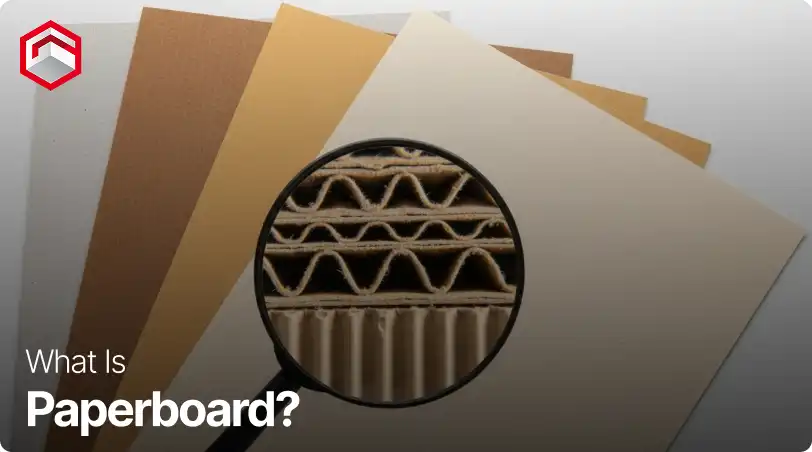
Paperboard is a thick, paper-based material used in packaging that is stronger than standard paper but lighter than corrugated cardboard, making it ideal for retail boxes and printed packaging.
Paperboard is the most demanded packaging material in the packaging industry today. Whether you are a curious customer, a business owner, or someone exploring packaging options, this complete guide will walk you through everything you need to know about paperboard. At BoxesGen, we work with paperboard every day to deliver premium packaging solutions that help brands stand out on shelves.
What Is Paperboard?
Paperboard, also known as boxboard, is a thick, paper-based material typically over 0.012 inches in thickness. It is denser and more rigid than standard paper but thinner and lighter than corrugated board, making it the perfect midpoint between regular paper and heavy-duty packaging materials.
Its smooth surface makes it ideal for high-quality printing and branding, which is why it remains a favorite choice in retail packaging across industries.
How Is Paperboard Made?
Paperboard is primarily derived from wood pulp and goes through a precise manufacturing process that includes the following steps:
- Pulping: Wood chips are processed into pulp using chemical or mechanical methods.
- Bleaching: The pulp is bleached to achieve a white or high-quality finish.
- Forming: Large rollers form the pulp into flat sheets.
- Pressing and Drying: The sheets are pressed and dried to remove moisture and add strength.
- Finishing: Coatings or additional layers are applied to improve durability and print quality.
Many paperboard products today are manufactured using recycled content, making them an environmentally responsible choice for modern brands.
Types of Paperboard
Understanding the different types of paperboard helps you choose the right material for your specific product. Here are the most common types:
- Solid Bleached Sulfate (SBS): Made from virgin wood pulp, SBS features a smooth, white surface on both sides. It is commonly used for cosmetics, pharmaceuticals, and luxury packaging where a premium finish is required. At BoxesGen, our custom luxury boxes are crafted using premium SBS paperboard.
- Coated Unbleached Kraft (CUK): Produced from unbleached wood pulp with a coating on one side, CUK is strong and moisture resistant, making it ideal for beverage carriers and food packaging.
- Folding Boxboard (FBB): A multi-ply board combining layers of chemical and mechanical pulp, FBB is stiff with a white surface and cream-colored core. It is widely popular in European markets for a variety of packaging applications. Explore our custom folding cartons made with high-quality FBB material.
- Whitelined Chipboard (WLC): Made from recycled fibres with a white surface layer suitable for printing, WLC is an economical option used in cereal boxes, tissue cartons, and similar products.
Key Features of Paperboard
Paperboard stands out from other packaging materials due to several important features:
- Printable surface that delivers excellent texture for vibrant graphics and branding
- Foldability that allows easy creasing and shaping into any box or carton style
- Lightweight construction that provides structural support without adding unnecessary bulk
- Recyclable and eco-friendly composition often made from post-consumer waste
- Versatile thickness options that make it adaptable for different strength and presentation needs
Applications of Paperboard
Paperboard is a multipurpose material used across a wide range of industries due to its adaptability and performance.
- Packaging: Paperboard is widely used for retail packaging, folding cartons for consumer goods, and as inserts and dividers inside shipping boxes. BoxesGen offers a wide range of custom packaging boxes built on high-quality paperboard materials.
- Printing and Publishing: It serves as book covers and dust jackets, greeting cards and stationery, as well as calendars and posters.
- Display and Signage: Paperboard is used for point-of-sale displays, shelf-ready packaging, and product information boards.
- Food and Beverage Industry: Common applications include cereal boxes, frozen food cartons, and beverage carriers. Browse our custom food boxes designed for food-grade paperboard packaging.
Advantages of Paperboard
Choosing paperboard for your packaging needs comes with a long list of benefits:
- Cost effective compared to many alternative packaging materials
- Eco-friendly as it is made from renewable or recycled resources
- Highly customizable since it can be easily cut, folded, or laminated into any style
- Print-friendly as it supports all major printing techniques
- Light yet strong offering the ideal balance between weight and durability
Paperboard vs Other Packaging Materials
Understanding how paperboard compares to other materials helps you make a more informed decision for your packaging needs.
- Paperboard vs Cardboard: Paperboard is thinner, more flexible, and best suited for small retail boxes, while cardboard is thicker and designed for heavy-duty shipping purposes.
- Paperboard vs Plastic: Paperboard is recyclable and biodegradable, making it the more eco-friendly choice, while plastic offers water resistance but carries a significantly higher environmental impact.
- Paperboard vs Rigid Boxes: Rigid boxes are sturdier and offer a more luxurious feel, while paperboard is the better option for cost-effective, high-volume packaging needs. Learn more about our custom rigid boxes if you need a premium alternative.
Sustainability and Environmental Benefits
As more brands shift toward eco-conscious packaging, paperboard continues to lead as one of the most sustainable options available:
- Fully recyclable and biodegradable
- Supports the circular economy by using post-consumer recycled fibres
- Often sourced from FSC-certified forests
- Carries a significantly lower carbon footprint compared to plastic packaging
At BoxesGen, we are committed to offering eco-friendly packaging solutions that help your brand reduce its environmental impact without compromising on quality or design.
Customization and Finishing Options
One of the biggest advantages of paperboard is its exceptional customizability. It can be finished in multiple ways to match different brand identities and product requirements:
- Embossing and debossing
- Foil stamping including gold, silver, and holographic finishes
- Gloss, matte, and soft-touch lamination
- UV spot coating
- Die-cut windows or handles for added visual appeal
Challenges of Paperboard Packaging
While paperboard offers numerous advantages, there are a few limitations to keep in mind:
- Moisture sensitivity means it requires protective coatings as it is prone to water damage
- Limited load-bearing capacity makes it unsuitable for very heavy-duty packaging
- Requires careful handling during shipping as it can be bent or dented without proper protection
Future Trends in Paperboard Packaging
With innovation advancing rapidly, paperboard is continuously evolving to meet the demands of the future:
- Edible and water-resistant coatings for food-safe applications
- Smart packaging integration with QR codes and embedded sensors
- Improved recycling technologies for a stronger circular economy
- Lighter boards engineered with higher strength-to-weight ratios
Conclusion
Paperboard offers the perfect balance of affordability, sustainability, and design flexibility. Whether you are in food, cosmetics, technology, or publishing, paperboard provides packaging solutions that elevate your product’s appeal while meeting today’s environmental standards.
If you are ready to explore premium paperboard packaging for your brand, BoxesGen is here to help. Browse our full range of custom packaging solutions and get a free quote today.