
 Apparel Boxes
 Soap Boxes
 Candle Boxes
 Bakery Boxes
 Cosmetic Boxes
 Cardboard Boxes
 Vape Boxes
 Pillow Boxes
 CBD Boxes
 Cigarette Boxes
 Hair Extension Boxes
 Retail Boxes
 Hemp Boxes
 Display Boxes
 Jewelry Boxes
 Food Boxes
 Die Cut Boxes
 Toy Boxes
 Window Boxes
 Corrugated Boxes
 Kraft Boxes
 Rigid Boxes
 Mailer Boxes
 Mylar Bags
 Gift Boxes
 Seasonal Boxes
 Custom Labels
 Custom Sticker
 Sport Boxes
 Foldable Boxes
 Gable Boxes
 Insert Boxes
 Sleeve Boxes
 Tuck Boxes
 Tin Packaging
 Tube Packaging
 Small Boxes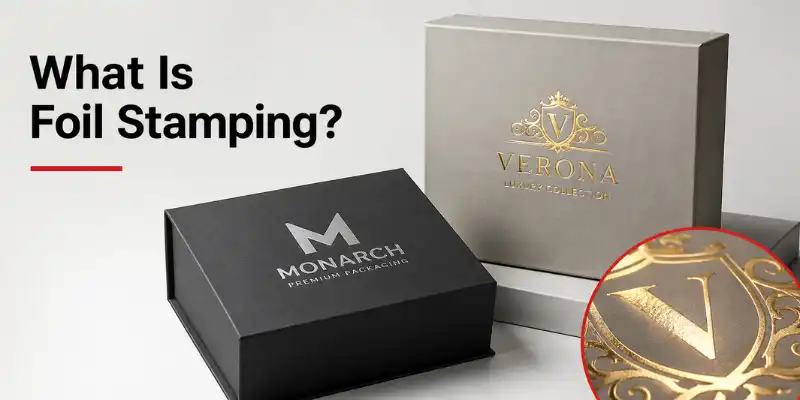
There is a reason why certain packaging stops people in their tracks — a metallic sheen on a logo, a gold accent catching the light on a retail shelf, or a silver finish that makes a gift box feel unmistakably premium before it is even opened. That effect, more often than not, comes from one specific finishing technique: foil stamping. It is one of the most powerful tools in commercial print packaging, and yet it is also one of the most misunderstood frequently confused with foil printing, metallic ink, or simple lamination by brands who have not worked closely with a custom box manufacturer before.
With over a decade of hands-on experience in custom packaging solutions and commercial print finishing, one thing is absolutely clear — foil stamping, when applied correctly and to the right substrate, transforms packaging from functional to truly unforgettable. If you are a brand trying to understand what foil stamping actually is, how the process works, what types are available, and whether it is the right choice for your custom packaging boxes, this is the guide you need. Let’s get into all of it.
What Is Foil Stamping?
Foil stamping is a specialty printing and finishing process in which a metallic or pigmented foil is permanently bonded to a packaging surface using a combination of heat, pressure, and a custom-engraved metal die. The result is a crisp, reflective, or colored finish applied precisely to a specific area of the box — whether that is a brand logo, a pattern, a border, or a single decorative element — that cannot be replicated by any standard ink-based printing technique.
The process is also referred to as hot foil stamping, foil blocking, or foil printing depending on the region and the manufacturing context, but the core technique remains the same. A heated metal die is pressed onto a thin roll of foil, which releases the metallic or colored coating from its carrier film and bonds it permanently to the surface of the packaging material below. The result is sharp, durable, and visually distinctive in a way that no amount of CMYK or Pantone printing can match.
This is not a surface coating applied over the full box. Foil stamping is precise, intentional, and typically used as an accent or highlight — which is exactly what makes it so effective as a branding tool. It draws the eye to exactly what the brand wants the customer to see first.
How Does the Foil Stamping Process Work?
Understanding the process gives you a much clearer picture of why foil stamping produces the quality it does — and why it requires a level of technical expertise that separates professional custom box manufacturers from commodity printers.
Step 1 — Die Creation
The process begins with the creation of a custom metal die — typically made from brass or magnesium — that is engraved with the exact design to be foil stamped. Brass dies are the preferred choice for high-volume production runs due to their durability and heat conductivity. Magnesium dies are more cost-effective for shorter runs or simpler designs. The quality of the die directly determines the sharpness and detail of the finished foil impression.
Step 2 — Foil Selection
The foil itself is a thin polyester film coated with a metallic or pigmented layer. It comes on a roll and is available in a wide range of finishes. The foil is placed between the heated die and the packaging substrate during production. Only the area in contact with the die releases the foil coating and bonds it to the surface — everything else remains unchanged.
Step 3 — Heat and Pressure Application
The heated die — set to a precise temperature based on the foil type and substrate material — is pressed down onto the foil and packaging surface with controlled pressure. The heat activates the foil’s adhesive layer, releasing the metallic coating from the carrier film and transferring it cleanly to the box surface. This step requires exact calibration of temperature, pressure, and dwell time to achieve a clean, consistent result across every unit in the production run.
Step 4 — Finishing and Quality Check
Once the foil is applied, the carrier film is removed, leaving only the stamped design on the packaging surface. Quality checks at this stage focus on foil adhesion, edge sharpness, consistency across the run, and any signs of foil pick-up in unwanted areas. In a professional manufacturing environment, this stage is as critical as the stamping itself.
Types of Foil Stamping Available for Custom Packaging
Foil stamping is not a single, fixed technique. There are several distinct types, each producing a different visual effect and suited to different packaging applications and brand aesthetics. Knowing the difference is essential before specifying foil on your custom packaging boxes.
| Foil Type | Visual Effect & Best Application |
|---|---|
| Metallic Gold Foil | Classic warm gold finish — the most widely used option for luxury, premium gifting, and cosmetic packaging |
| Metallic Silver Foil | Bright chrome-like silver finish — ideal for electronics, tech products, and modern premium brands |
| Rose Gold Foil | Soft warm pink-gold tone — heavily used in beauty, skincare, and feminine lifestyle packaging |
| Holographic Foil | Rainbow prismatic effect that shifts with light — high-impact for limited edition and display packaging |
| Matte Foil | Flat metallic finish without gloss — sophisticated and modern, pairs well with matte lamination |
| Gloss Foil | High-shine reflective finish — maximum visual impact on logos and brand marks |
| Pigment Foil | Solid non-metallic colours in foil form — used where colour accuracy and opacity are critical |
| Pearlescent Foil | Subtle iridescent shimmer — popular in wedding, beauty, and artisan product packaging |
Foil Stamping vs Other Premium Finishing Techniques
One of the most common questions that comes up during the packaging specification process is how foil stamping compares to other finishing options. Each technique serves a different purpose and produces a different result — understanding these differences is key to making the right call for your custom packaging solutions.
| Finishing Technique | How It Works | Best Use Case |
|---|---|---|
| Hot Foil Stamping | Metallic foil bonded via heat and die | Logo highlights, brand marks, premium accents |
| Spot UV Coating | Gloss UV resin applied to specific areas | Texture contrast over matte backgrounds |
| Embossing | Raises surface area with a 3D effect | Logo depth and tactile brand impression |
| Debossing | Presses design into the surface | Subtle, understated premium logo treatment |
| Metallic Ink Printing | Ink mixed with metallic pigment | Budget alternative — less reflective than foil |
| Holographic Lamination | Full-surface prismatic film | Full-coverage holographic effect on entire box |
| Soft-Touch Lamination | Matte velvety surface coating | Premium tactile feel — pairs well with foil |
The key distinction to understand is that foil stamping produces a true metallic reflection that metallic ink printing simply cannot replicate. Metallic inks use pigment particles in suspension — the result is a metallic approximation, not a genuine reflective surface. For brands where the logo or brand mark needs to command premium shelf presence, foil stamping is the only technique that delivers the real thing.
Materials Compatible with Foil Stamping
Not every packaging material performs equally well under the foil stamping process. The substrate — the material the foil is applied to — plays a significant role in how cleanly the foil bonds, how sharp the detail is, and how durable the final finish is during shipping, handling, and retail display.
Best Substrates for Foil Stamping
- Coated cardboard and SBS board — the most reliable substrate for clean, sharp foil adhesion with maximum reflectivity
- Rigid board and chipboard — ideal for premium boxes, gift packaging, and high-end retail custom packaging solutions
- Kraft board — natural uncoated surface that works well with foil but produces a slightly softer edge compared to coated stock
- Corrugated packaging — single-wall corrugated with a coated liner can accept foil stamping, though detail level is more limited
- Laminated surfaces — matte or gloss laminated boards produce exceptional foil results as the lamination creates a consistent, receptive surface
Substrates That Require Special Consideration
- Uncoated natural kraft — foil adhesion is possible but fine detail may not transfer as cleanly; best suited to simple shapes and larger design elements
- Recycled content boards — surface texture can vary, affecting foil consistency; always test before committing to full production runs
- Textured papers — can produce an interesting aesthetic but require careful die pressure calibration to achieve consistent results
Which Products and Industries Benefit Most from Foil Stamping?
Foil stamping is not a universal solution for every product or every budget — but for the right product categories, it delivers commercial returns that far outweigh the additional production cost. Here is where it makes the biggest impact.
Cosmetics and Beauty Packaging
The cosmetics industry runs on perceived value, and foil stamping is one of the most effective tools available to elevate that perception. Gold foil on lipstick boxes, rose gold on skincare sets, and holographic foil on limited-edition collections are all well-established applications. In a category where packaging is inseparable from the product experience, foil stamping is often non-negotiable for mid-to-premium tier brands.
Luxury Retail and Gift Packaging
Custom retail packaging boxes for premium gifting — jewelry, watches, perfumes, premium confectionery — almost universally use foil stamping as part of the finishing specification. A gift box without foil feels incomplete in this segment. The reflective quality of gold or silver foil communicates luxury at a sensory level that print alone cannot achieve.
Food and Confectionery Packaging
Premium chocolate, artisan baked goods, and specialty food products use foil stamping to position themselves above commodity competitors on the retail shelf. A gold-foiled logo on a chocolate box or a foil-stamped band on a tea canister signals quality and craftsmanship to the consumer before a single ingredient is read.
Electronics and Tech Accessories
Silver and holographic foils are widely used in electronics packaging — headphones, smart devices, and premium accessories — where a modern, high-tech aesthetic is the priority. The sharp, clean finish of foil stamping aligns with the precision manufacturing messaging these brands need to communicate.
E-Commerce and Subscription Packaging
Direct-to-consumer brands are increasingly using foil-stamped mailer boxes and custom subscription packaging to create an unboxing experience that earns organic social media coverage. A single foil-stamped logo on the inner lid of a mailer box can be the detail that turns a one-time customer into a brand advocate who photographs and shares the experience.
Foil Stamping Customization Options at BoxesGen
At BoxesGen, foil stamping is available across our full range of custom packaging boxes, from retail packaging boxes and mailer boxes to rigid gift boxes, custom cardboard boxes, and corrugated packaging. Here is a breakdown of the full customization scope we offer.
Foil Colours Available
- Gold, silver, rose gold, copper, bronze, and custom metallic variants
- Holographic rainbow and holographic silver for high-impact display packaging
- Matte gold and matte silver for understated luxury applications
- Pearlescent and iridescent foils for beauty and artisan product categories
- Pigment foils in custom matched colours for brand-specific applications
Foil Stamping Combined with Other Finishes
- Foil stamping over matte lamination — the most popular combination for premium packaging, producing maximum contrast between the matte background and reflective foil accent
- Foil stamping with embossing — raises the foil-stamped design for a three-dimensional premium effect known as combination stamping
- Foil stamping with spot UV — two specialty finishes used together for multi-texture luxury packaging
- Foil stamping on soft-touch laminated boards — velvet texture with metallic accent for an exceptional tactile and visual premium experience
Box Styles That Support Foil Stamping at BoxesGen
- Rigid gift boxes and two-piece lid and base boxes
- Custom mailer boxes with full exterior foil application
- Retail packaging boxes including tuck end, sleeve, and display styles
- Custom cardboard boxes for cosmetics, food, and electronics
- Corrugated packaging with coated liner for shipping-grade foil application
Why Choose BoxesGen for Foil Stamped Custom Packaging?
Foil stamping is a technique that demands precision at every stage — from die quality and temperature calibration to substrate selection and quality control across the production run. At BoxesGen, we have spent years refining our foil stamping process across hundreds of packaging projects, and that experience shows in the consistency and quality of every finished box we produce.
Here is what working with BoxesGen on your foil stamped custom packaging actually looks like:
- Free packaging consultancy — our team helps you select the right foil type, substrate, and finish combination for your product and budget before any tooling cost is committed
- In-house die fabrication and foil stamping capabilities ensuring quality control at every stage of production
- Full range of foil colours and finish combinations available across all custom box styles
- Food-safe and certified material options available for all packaging applications requiring compliance
- Competitive bulk order pricing with transparent tooling costs and no hidden charges
- Short-run digital alternatives available for brands testing foil finishes before committing to large production volumes
- Fast turnaround times with reliable lead time commitments — because your launch schedule matters as much to us as it does to you
Whether you are launching a new premium product line, revamping your retail packaging boxes, or looking to add a single foil-stamped detail that elevates your current packaging, the BoxesGen team has the expertise and the production capability to make it happen right the first time.
Final Thoughts
Foil stamping is one of the most commercially effective finishing techniques available in custom packaging — not because it is the most expensive option, but because it consistently delivers a visual and tactile quality that consumers associate with premium value, craft, and brand confidence. When applied to the right substrate, combined with the right base finish, and executed with precision manufacturing, foil stamping transforms a functional packaging box into a brand asset that works harder than any paid advertisement.
The key is understanding what you need it to do for your product, your audience, and your retail or e-commerce environment — and then working with a manufacturing partner who has the technical knowledge and production experience to deliver it consistently. If you are ready to explore foil stamping for your custom packaging solutions, BoxesGen is here to walk you through every decision from foil selection to final production. Reach out today for a free consultation and custom quote.
Frequently Asked Questions (FAQs)
1. What is the difference between foil stamping and metallic ink printing?
Foil stamping uses a real metallic foil bonded to the packaging surface via heat and a custom die, producing a true reflective metallic finish. Metallic ink printing uses ink mixed with metallic pigment particles, which approximates a metallic look but cannot replicate the genuine reflective quality of foil. For brand marks and logos where premium shelf presence matters, foil stamping is the superior option in both visual impact and durability.
2. Does foil stamping work on kraft packaging?
Yes, foil stamping can be applied to kraft packaging, though the result differs slightly from coated board. Uncoated kraft produces a softer foil edge and slightly less reflectivity compared to coated substrates. For clean, detailed foil work on kraft, it is advisable to keep the stamped design relatively simple — bold logos, clean wordmarks, and simple geometric shapes all transfer well. For intricate fine-line designs, coated board or laminated kraft is recommended.
3. Can foil stamping be combined with embossing?
Yes, and this combination is known as combination stamping or registered embossing with foil. The process uses a specially engineered die that both transfers the foil and creates a raised three-dimensional impression simultaneously. The result is one of the most premium finishing effects available in commercial packaging — the foil logo lifts off the surface, catching light from multiple angles. At BoxesGen, we offer combination stamping across our rigid, retail, and gift box ranges.
4. How does foil stamping affect the recyclability of packaging?
The impact of foil stamping on recyclability depends on the volume of foil applied and the recycling infrastructure in the destination market. For small accent applications — a logo or brand mark — the quantity of foil is generally minimal enough that the packaging remains widely recyclable. For full-surface foil coverage, some recycling streams may not accept the material. At BoxesGen, we can advise on foil coverage levels and alternative finishing approaches that balance premium aesthetics with sustainability goals.
5. What is the minimum order quantity for foil stamped custom boxes at BoxesGen?
At BoxesGen, we support both short production runs and large-scale bulk orders for foil stamped custom packaging. Minimum order quantities vary depending on box style, size, foil type, and substrate. Contact our team directly for a detailed quote based on your specific requirements — we will always be transparent about tooling costs, per-unit pricing, and lead times upfront so you can make an informed decision without surprises.