 Apparel Boxes
 Soap Boxes
 Candle Boxes
 Bakery Boxes
 Cosmetic Boxes
 Cardboard Boxes
 Vape Boxes
 Pillow Boxes
 CBD Boxes
 Cigarette Boxes
 Hair Extension Boxes
 Retail Boxes
 Hemp Boxes
 Display Boxes
 Jewelry Boxes
 Food Boxes
 Die Cut Boxes
 Toy Boxes
 Window Boxes
 Corrugated Boxes
 Kraft Boxes
 Rigid Boxes
 Mailer Boxes
 Mylar Bags
 Gift Boxes
 Seasonal Boxes
 Custom Labels
 Custom Sticker
 Sport Boxes
 Foldable Boxes
 Gable Boxes
 Insert Boxes
 Sleeve Boxes
 Tuck Boxes
 Tin Packaging
 Tube Packaging
 Small Boxes

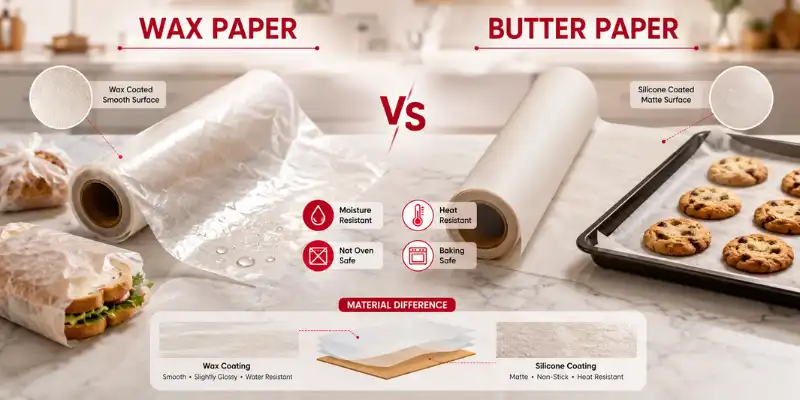
Wax paper and butter paper (also called parchment paper in the USA) look similar but serve very different purposes in the kitchen.
| Feature | Wax Paper | Butter Paper |
|---|---|---|
| Coating | Paraffin wax | Silicone-treated |
| Oven safe? | ✗ No | ✓ Yes (up to 450°F) |
| Non-stick | ✓ Yes | ✓ Yes |
| Best for | Wrapping, freezing, cold prep | Baking, roasting, cooking |
Never use wax paper in the oven. The paraffin wax melts at around 150°F–165°F, causing smoking and potentially contaminating your food.
The key difference is heat resistance. Wax paper melts at standard baking temperatures, making it unsafe for oven use. Butter paper (parchment) is silicone-coated and can withstand up to 420–450°F, making it the go-to for lining baking sheets, cake pans, and roasting vegetables.
For cold kitchen tasks — wrapping sandwiches, layering cookies in a tin, or separating frozen burger patties — both papers work well. But when heat is involved, always reach for butter paper (parchment).
What Is Wax Paper?
Wax paper is a thin, flexible paper that has been coated on both sides with a food-grade paraffin wax. That coating is what gives it its distinctive slightly slick, slightly translucent look — and its key properties.
The wax coating makes the paper:
- Moisture-resistant — liquids bead up and don’t soak through
- Non-stick on both surfaces — food doesn’t cling to it easily
- Flexible and easy to tear — ideal for wrapping and layering
Wax paper has been a kitchen staple in American homes since the late 1800s. You’ll find it in virtually every grocery store in the US, typically alongside plastic wrap and aluminum foil.
Important note: The paraffin wax coating has a relatively low melting point — around 150°F–165°F. This means wax paper is NOT oven-safe. If you expose it to direct oven heat, the wax can melt off, potentially smoke, and transfer onto your food or baking surface.
What Is Butter Paper?
Butter paper — also widely known as parchment paper in the United States — is a cellulose-based paper that has been treated with silicone (or sometimes sulfuric acid in older processing methods) to create a heat-resistant, non-stick surface.
Unlike wax paper, butter paper gets its non-stick quality not from a wax coating, but from silicone treatment embedded into the paper fibers.
This gives butter paper its standout properties:
- Heat resistant up to 420°F–450°F (some brands up to 500°F)
- Non-stick surface — perfect for baking cookies, cakes, and pastries
- Grease-resistant — holds up against buttery, oily batters without soaking through
- FDA-recognized as safe for direct food contact during cooking
In professional bakeries, restaurants, and commercial food operations across the USA, butter paper (parchment paper) is essentially indispensable. Walk into any serious bakery kitchen and you’ll see sheet pans lined with it, pastry wrapped in it, and baking logs rolled in it.
Quick terminology note for US readers: In everyday American English, “parchment paper” is the most common term. “Butter paper” is used more widely in the UK, South Asia, and parts of the food packaging industry. They refer to the same product. Throughout this guide, we’ll use both terms interchangeably.
Wax Paper vs Butter Paper: Head-to-Head Comparison
| Feature | Wax Paper | Butter Paper (Parchment Paper) |
|---|---|---|
| Coating/Treatment | Paraffin wax (both sides) | Silicone-treated cellulose |
| Oven Safe? | ❌ No | ✅ Yes (up to 420–450°F) |
| Non-Stick? | ✅ Yes | ✅ Yes |
| Moisture Resistant? | ✅ Yes | ✅ Yes |
| Microwave Safe? | ✅ Yes (short use) | ✅ Yes |
| Freezer Safe? | ✅ Yes | ✅ Yes |
| Grease Resistant? | Partially | ✅ Yes |
| Best For | Wrapping, layering, cold food prep | Baking, roasting, cooking |
| FDA Safe for Food Contact? | ✅ Yes | ✅ Yes |
| Reusable? | Limited | Sometimes (if not soiled) |
| Average Price (USA) | $ (budget-friendly) | $$ (slightly more) |
| Eco Options | Limited | Unbleached compostable options available |
Uses of Wax Paper in the Kitchen
Wax paper shines in situations that don’t involve heat. Here’s where it genuinely earns its place:
1. Wrapping Sandwiches and Deli Items
Delis and sandwich shops across the US use wax paper constantly. It keeps sandwiches fresh, prevents sogginess, and is easy for customers to unwrap. The moisture barrier keeps bread from getting wet while still allowing just enough breathability.
2. Layering Baked Goods for Storage
When stacking cookies, brownies, or chocolate-dipped treats in a tin or container, place sheets of wax paper between each layer. It prevents them from sticking together without affecting flavor.
3. Candy Making and Chocolate Work
Wax paper is a go-to surface for setting chocolate-dipped strawberries, homemade truffles, and candy bark. Once cooled, the treats pop right off cleanly.
4. Kneading and Rolling Dough
Lay a sheet of wax paper on your countertop as a quick, non-stick work surface for rolling pie crust, pasta dough, or cookie dough. Easy cleanup, no floury mess to scrub off.
5. Freezing Meats and Foods
When freezing individual portions — burger patties, chicken breasts, pancakes — separate them with wax paper to prevent freezer clumping. It’s budget-friendly and works perfectly for this purpose.
6. Funnel for Dry Ingredients
Fold a sheet of wax paper into a makeshift funnel to pour flour, sugar, or spices without spills. Old baker’s trick that still works great.
Uses of Butter Paper (Parchment Paper) in Baking and Cooking
This is where butter paper truly dominates. Professional bakers consider it non-negotiable.
1. Lining Baking Sheets and Cake Pans
The #1 use. Line your sheet pan with parchment before baking cookies, roasting vegetables, or cooking fish. No sticking, no scrubbing, and your pan stays cleaner longer.
2. Baking Cakes and Brownies
Cut a piece to fit the bottom of your cake pan — your layers will release perfectly every time. Many professional pastry chefs also line the sides of springform pans for cheesecakes.
3. En Papillote (Cooking in Parchment Packets)
This French cooking technique involves sealing fish, chicken, or vegetables inside a folded parchment pouch and baking it. The food steams in its own juices — it’s healthy, flavorful, and impressive.
4. Rolling and Shaping Pastry Dough
Place your dough between two sheets of parchment paper before rolling. You get an even roll without sticking, and you can lift the whole thing onto a pan easily.
5. Lining Air Fryer Baskets
Parchment paper (specifically perforated air fryer parchment) is used by home cooks to line air fryer baskets, making cleanup a breeze.
6. Food Wrapping for Bakeries and Food Businesses
Small bakeries and food businesses use unbleached parchment to wrap artisan breads, croissants, and pastries. It looks professional and keeps products fresh.
7. Dehydrating and Low-Heat Roasting
At lower oven temperatures, parchment paper is ideal for dehydrating herbs, drying fruit slices, or slow-roasting tomatoes.
Can Wax Paper and Butter Paper Be Substituted for Each Other?
This is the question that gets people into trouble. Here’s the honest answer:
Sometimes — but not always.
When you CAN substitute wax paper for butter paper:
- Cold food prep (rolling dough, wrapping items, layering baked goods)
- Freezer use — both work well
- Candy or chocolate setting at room temperature
When you CANNOT substitute wax paper for butter paper:
- In the oven — this is a hard no. Wax paper in an oven at baking temperatures (350°F+) will cause the wax to melt and smoke. It’s a fire hazard and will ruin your food.
- On hot pans or under broilers — same issue
- Air fryers — the circulating heat will cause wax paper to melt and potentially ignite
Bottom line: If heat is involved, always use butter paper (parchment). For cold applications, either works fine.
Safety and Heat Resistance Guide
Understanding the heat limits of each paper keeps your kitchen safe.
Wax Paper Safety
- Safe temperature range: Up to approximately 150°F–165°F (the wax melting point)
- Microwave use: Generally okay for short durations (covering food to prevent splatter) — but avoid extended microwave cooking
- Never use in: Conventional ovens, toaster ovens, air fryers, or under broilers
- FDA status: Wax paper with food-grade paraffin wax is considered safe for food contact under FDA regulations
Butter Paper (Parchment) Safety
- Safe temperature range: Up to 420°F–450°F for most brands; some specialty parchment papers are rated to 500°F
- Microwave safe: Yes
- Oven safe: Yes — this is its primary purpose
- Broiler safe? Use caution — most brands advise keeping parchment away from direct broiler elements, as extremely high temperatures (over 500°F) can cause scorching
- FDA status: Silicone-treated parchment paper is widely recognized as food-safe by the FDA
Quick Reference: Is Wax Paper Safe for the Oven?
No. Wax paper should never be used in the oven. The paraffin wax coating will melt at standard baking temperatures, cause smoking, and may transfer to your food. Always use parchment paper (butter paper) for any oven application.
Expert Tips for Baking and Food Storage
- Keep both on hand. They serve different purposes. Wax paper for wrapping and cold prep; parchment for baking. The cost difference is minimal and having both saves headaches.
- Buy pre-cut parchment sheets if you bake often. Pre-cut half-sheet or quarter-sheet parchment rounds save time and fit perfectly in standard US baking pans. Bakeries use these exclusively.
- Look for unbleached parchment for health-conscious baking. Bleached parchment is chlorine-treated; unbleached is the natural brown color and is increasingly preferred by home bakers who want minimal chemical exposure.
- For holiday cookie gifting, use wax paper between layers in tins. It’s affordable, does the job perfectly, and your cookies won’t arrive as one giant stuck-together mass.
- Don’t reuse parchment that’s darkened or brittle. Lightly used parchment (for simple cookie baking) can be reused once or twice if it’s still intact. Heavily soiled or charred pieces should be discarded.
- For food businesses wrapping pastries: use parchment, not wax. Wax paper can leave a slight waxy residue feeling on pastry surfaces. Parchment gives a cleaner, more professional result.
- When in doubt — go parchment. It handles heat, it handles cold, it handles moisture. It’s the more versatile of the two.
Frequently Asked Questions
Is wax paper the same as butter paper?
No. Wax paper is coated with paraffin wax and is not heat-safe. Butter paper (also called parchment paper in the USA) is silicone-treated and is oven-safe up to around 420°F–450°F. They look similar but serve different purposes in the kitchen.
Can I use wax paper instead of parchment paper for baking?
No, you should not use wax paper in the oven as a substitute for parchment paper. The wax coating melts at baking temperatures, which can cause smoking, affect the flavor of your food, and create a potential fire hazard. Always use parchment paper for oven baking.
What is butter paper used for in baking?
Butter paper (parchment paper) is used to line baking sheets and cake pans to prevent sticking, wrap pastries and breads, roll out dough, cook en papillote, and line air fryer baskets. It is heat-resistant and non-stick, making it essential for professional and home baking.
Is wax paper safe for food wrapping?
Yes, wax paper is FDA-recognized as safe for direct food contact. It is widely used for wrapping sandwiches, deli items, candy, and layering baked goods for storage. It should not be used in ovens or with high heat.
What is the difference between wax paper and parchment paper?
The main difference is heat resistance and coating. Parchment paper is silicone-coated and oven-safe (up to 450°F). Wax paper is paraffin wax-coated and is not oven-safe. Both are non-stick and moisture-resistant, but parchment paper is the more versatile option for cooking and baking.
Can wax paper go in the microwave?
Wax paper can be used in the microwave for short periods — such as covering a dish to prevent splatter. However, it is not recommended for extended microwave cooking. Parchment paper is generally the safer and more reliable option for microwave use.
Which is better for baking: wax paper or butter paper?
Butter paper (parchment paper) is always better for baking. It is heat-safe, non-stick, and grease-resistant, making it ideal for cookies, cakes, roasted vegetables, and anything that goes in the oven. Wax paper cannot be used in the oven safely.
Is butter paper the same as parchment paper in the USA?
Yes. In the United States, parchment paper and butter paper refer to the same product — a silicone-treated, heat-resistant baking paper. “Butter paper” is more commonly used in the UK and parts of Asia. In US grocery stores and commercial kitchens, you’ll typically see it labeled as parchment paper.
Conclusion
Here’s the quick summary you can take straight to your kitchen:
Wax paper is your go-to for cold applications — wrapping food, layering baked goods, rolling dough on the counter, and freezer storage. It’s moisture-resistant, affordable, and perfectly safe for food contact. Just keep it away from heat.
Butter paper (parchment paper) is your baking essential. It’s oven-safe up to 450°F, non-stick, grease-resistant, and versatile enough to handle everything from cookie sheets to cooking pouches. If you only keep one in your kitchen, make it this one.
The confusion between the two is completely understandable — they look alike, they’re stored in the same aisle, and they’re both described as “non-stick food paper.” But understanding the difference will genuinely improve your baking results and keep your kitchen safe.
Use the right paper for the right job, and you’ll wonder how you ever managed without knowing this.
About BoxesGen
If you’re a small food business, bakery, or food brand looking for custom food packaging and professional wrapping materials, BoxesGen is worth knowing about. BoxesGen is a modern packaging and printing solution provider based in the USA, offering high-quality custom packaging boxes, food-safe packaging solutions, and eco-friendly wrapping materials tailored for businesses of all sizes. Whether you need branded food-grade paper, custom bakery boxes, or sustainable packaging alternatives, BoxesGen combines quality materials with thoughtful design to help your products make the right impression from the kitchen to the customer’s hands.
 Facebook
 Twitter
 LinkedIn
 Pinterest