
 Apparel Boxes
 Soap Boxes
 Candle Boxes
 Bakery Boxes
 Cosmetic Boxes
 Cardboard Boxes
 Vape Boxes
 Pillow Boxes
 CBD Boxes
 Cigarette Boxes
 Hair Extension Boxes
 Retail Boxes
 Hemp Boxes
 Display Boxes
 Jewelry Boxes
 Food Boxes
 Die Cut Boxes
 Toy Boxes
 Window Boxes
 Corrugated Boxes
 Kraft Boxes
 Rigid Boxes
 Mailer Boxes
 Mylar Bags
 Gift Boxes
 Seasonal Boxes
 Custom Labels
 Custom Sticker
 Sport Boxes
 Foldable Boxes
 Gable Boxes
 Insert Boxes
 Sleeve Boxes
 Tuck Boxes
 Tin Packaging
 Tube Packaging
 Small Boxes

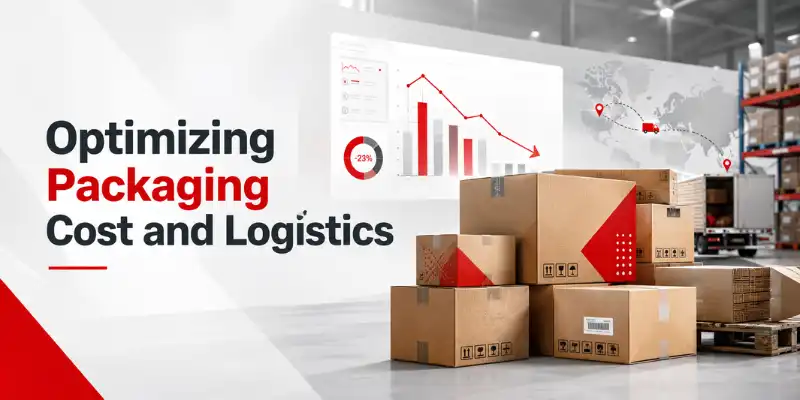
Every time a product leaves your warehouse, packaging is either working for you or against you. It’s protecting your goods, representing your brand, and directly determining what you pay in freight — all at the same time. Yet the vast majority of businesses treat packaging as an afterthought. They choose boxes based on habit, negotiate with a single supplier because it’s comfortable, and accept dimensional weight penalties because they’ve never run the math.
That approach quietly drains margins. Based on my experience auditing packaging operations across retail, eCommerce, food manufacturing, and industrial distribution, packaging and logistics inefficiencies routinely cost businesses between 12% and 22% of their total fulfillment budget — money that disappears without ever appearing on a single P&L line labeled “packaging waste.”
This guide changes that. We’ll walk through the full picture: what packaging logistics really costs, where the hidden expenses live, and exactly how to build a leaner, smarter, more profitable system. Whether you’re running a growing DTC brand or managing procurement for a national retailer, the frameworks here are practical, proven, and ready to apply.
What Is Packaging Cost and Logistics?
Packaging cost and logistics isn’t just the price of a box. It’s the entire operational ecosystem that surrounds how your products get protected, stored, moved, and delivered — from the material choices you make at the design stage all the way to the condition the package arrives in on your customer’s doorstep.
Packaging logistics specifically refers to the coordinated management of packaging throughout the supply chain: manufacturing or sourcing the packaging materials, storing them at appropriate locations, deploying them efficiently at packing stations, optimizing how packed products are stacked and transported, and handling returns or disposal at the end of the cycle.
INDUSTRY PERSPECTIVE
Most packaging audits I conduct reveal the same pattern:
businesses are paying for packaging that’s bigger, heavier, or more structurally complex than the product actually needs. Each of those over-specs creates a compounding cost effect across materials, storage, freight, and labor.
Together, packaging cost and logistics decisions affect your product protection rates, your cost-per-shipment, your warehouse utilization, your carrier invoices, and — increasingly — your ESG reporting obligations. No other operational variable touches so many parts of the business simultaneously.
Why Packaging Cost and Logistics Matters for Modern Businesses
The Cost Impact Is Larger Than Most Teams Realize
Carrier pricing models have shifted significantly. FedEx, UPS, and USPS all now use dimensional weight (DIM) pricing — meaning you’re billed based on the space a package occupies, not just what it weighs. A product that weighs 1.2 lbs shipped in an oversized box can be billed at 4 lbs of billable weight. Multiply that across thousands of shipments per month and the overcharge becomes substantial.
Beyond freight, there are material costs, labor costs for packing time, storage costs for excess packaging inventory, and damage-related costs when under-protected products arrive broken. It all adds up — and it’s all addressable.
Customer Experience Is Directly Tied to Packaging
Consumer expectations around packaging have risen sharply in recent years. Unboxing experiences are shared on social media. Damage rates drive negative reviews. Excessive plastic creates customer complaints on environmental grounds. Packaging quality is no longer just a logistics variable — it’s a brand variable.
Operational Efficiency Starts With the Right Box
The right packaging reduces packing time per order, allows higher stack density in trucks, minimizes damage claims, reduces dunnage material usage, and speeds up receiving at distribution centers. Every design decision has a downstream operational consequence, usually invisible until you specifically go looking for it.
Core Components of Packaging Cost and Logistics
Corrugated board, poly mailers, rigid boxes, void fill, tape, labels. Material selection drives both cost-per-unit and performance across the entire logistics chain.
Box dimensions, flute grade, burst strength. Over-engineering wastes money; under-engineering causes damage claims. Right-sizing is the target.
Supplier relationships, volume commitments, lead times, and redundancy planning. Single-source dependency is one of the most dangerous hidden risks in packaging operations.
Packaging takes up floor space. Inventory turnover, minimum order quantities, and just-in-time programs all affect how much capital is tied up in packaging stock at any moment.
How long it takes to pack an order. Complex assembly, excessive tape lines, multi-layer protection — these all extend pack time and drive labor cost per shipment.
DIM weight, fuel surcharges, residential fees, oversize penalties, and zone pricing. Packaging dimensions directly determine which carrier tier your shipments fall into.
Types and Classifications of Packaging
Understanding packaging tiers matters because each level carries distinct cost and logistics implications:
| TYPE | PURPOSE | KEY COST DRIVER | LOGISTICS CONSIDERATION |
|---|---|---|---|
| Primary | Directly contacts the product (bottle, blister, pouch) | Material spec & print quality | Product integrity, shelf appeal |
| Secondary | Groups primary packs (folding carton, shipper) | Structural grade & printing | Retail display, inner-pack efficiency |
| Tertiary | Bulk transport (corrugated cases, pallets, stretch wrap) | Cube utilization & pallet density | Freight cost, DC handling speed |
| Returns/Reverse | Resaleable condition after customer return | Rework labor & material reuse | Reverse logistics loop cost |
Most cost optimization programs focus exclusively on primary and secondary packaging. In my experience, tertiary packaging — specifically pallet configuration and truck loading — often holds the largest untapped savings, sometimes 8–15% of total freight spend in high-volume operations.
Major Challenges Businesses Face in Packaging Cost and Logistics
Dimensional Weight Penalties
This is the most common and most damaging cost problem I see in eCommerce and B2B shipping operations. The DIM factor used by major carriers means that any cubic inch of air inside a package has a price. A 12×12×12 box ships at 10.29 lbs billable weight regardless of what’s actually inside it. For businesses shipping hundreds of different SKUs in standard box sizes, the accumulated DIM penalty can exceed the actual product weight billed by 30–40%.
If DIM weight exceeds actual weight, you pay DIM weight. A 10×10×10 box = 7.19 DIM lbs — billed regardless of actual product weight.
Supplier Concentration Risk
COVID-era disruptions exposed how vulnerable single-source packaging procurement is. Businesses that had secondary or tertiary supplier relationships in place recovered in weeks. Those with single-source dependencies faced production shutdowns that lasted months.
SKU Proliferation in Packaging
Growing businesses often accumulate packaging SKUs over time — different box sizes for different products, each ordered in separate runs at lower volumes and higher per-unit costs. A brand selling 80 products in 35 different box configurations is almost certainly spending 20–30% more than necessary on materials and storage compared to a rationalized size matrix.
Invisible Labor Costs
A packing station that takes 90 seconds to pack an order versus 60 seconds doesn’t sound significant. At 500 orders per day, that’s 125 extra man-hours per week — or roughly one additional full-time headcount that exists purely because of packaging design choices.
Businesses negotiate hard on packaging unit cost while ignoring labor time per pack. Saving $0.03 per box means nothing if the box design adds 20 seconds to every pack cycle.
Supply Chain Tariff and Trade Volatility
Proposed tariff increases of up to 20% on all imports, with potentially higher rates on goods from specific countries, are adding significant complexity to packaging procurement planning. Businesses sourcing corrugated board, poly materials, or specialty packaging components internationally must now build tariff risk into their landed cost models.
Best Practices for Packaging Cost and Logistics Optimization
Conduct a packaging audit first. Before changing anything, measure what you actually have. Document every packaging SKU, its cost per unit, its average pack time, its freight performance, and its damage rate. Data tells the story your intuition can’t.
- Right-size your box matrix. Most businesses can cover 85–90% of their shipment volume with 4–6 standardized box sizes. Design that matrix deliberately rather than accumulating sizes reactively.
- Eliminate void fill where possible. Void fill (air pillows, paper fill, packing peanuts) is a symptom of oversized packaging. Every bag of air pillows you stop buying is a packaging cost you’ve eliminated at the source.
- Negotiate volume-tiered contracts with suppliers. Annual volume commitments reduce unit cost. Even if you can’t predict exact quantities, price-break tiers give you access to better rates as volume builds.
- Run the DIM weight calculation on your top 20 shipping SKUs. Identify which products are generating the largest gap between actual and billable weight and redesign packaging for those first.
- Diversify your supplier base. Maintain at least two qualified suppliers per critical packaging component. The cost of qualification is far lower than the cost of a production stoppage.
- Time packaging procurement to your sales cycle. Just-in-time programs for stable SKUs reduce warehouse holding costs. Safety stock calculations should account for lead times, not just average demand.
- Align packaging design with automation from the start. If you intend to automate packing at any point, the packaging format needs to be compatible with automated case erectors, tapers, and void fill systems before you invest in equipment.
Cost Analysis and Budget Planning
The true cost per shipment is rarely what most operations teams think it is. A full-cost analysis needs to capture every element:
Most teams only track “material cost + freight.” The remaining variables can equal or exceed that figure in labor-intensive operations.
Packaging Cost as a Percentage of Revenue
Industry benchmarks vary significantly by sector, but here’s what I typically see in healthy operations:
| INDUSTRY | PACKAGING COST AS % OF COGS | MAIN COST DRIVER |
|---|---|---|
| eCommerce (soft goods) | 3–7% | Freight + void fill |
| Food & Beverage | 8–15% | Material spec + regulatory compliance |
| Cosmetics / Personal Care | 15–25% | Premium materials + print quality |
| Electronics | 5–10% | Protective engineering + inserts |
| Pharmaceutical | 10–20% | Compliance + serialization |
| Luxury Goods | 20–35% | Brand investment + unboxing experience |
Where to Find Cost Reduction
In a typical packaging cost reduction engagement, here’s where the savings tend to come from, in approximate order of impact:
- Freight optimization through right-sizing: 8–18% savings on shipping costs. 2. Material rationalization and volume consolidation: 5–12% reduction in material cost. 3. Labor efficiency improvements through design: 10–20% reduction in packing labor. 4. Damage rate reduction: Depends on baseline, but 1% damage rate reduction on high-value product is often worth more than all material savings combined. 5. Inventory financing cost: Reducing packaging stock levels through JIT programs frees working capital.
The Role of Automation and AI in Packaging Logistics
This is where the next decade of savings will be found. Technology adoption is transforming packaging logistics from a labor-intensive, reactive function into a data-driven, predictive system. Companies adopting AI and IoT technologies in their warehousing operations are reporting productivity gains of up to 77%.
AI-Powered Demand Forecasting
Machine learning models now predict packaging consumption patterns with far greater accuracy than traditional moving-average methods. For a distribution center packing 2,000+ orders per day across 50 packaging SKUs, accurate demand forecasting eliminates emergency orders, prevents stockouts, and reduces excess inventory carrying costs — typically by 15–25%.
Automated Box Selection Systems
Cartonization software evaluates each order’s item dimensions and weight, then selects the optimal box size and fill configuration automatically. In operations where pack decisions are currently made by individual employees at packing stations, cartonization can reduce material usage by 10–20% and cut packing time by up to 30%.
RFID and IoT Visibility
RFID-tagged packaging and IoT-connected pallets provide real-time location data throughout the supply chain. For businesses managing high-value products or temperature-sensitive shipments, this visibility reduces shrinkage, improves damage claims documentation, and enables proactive exception management rather than reactive problem-solving after goods are already lost or damaged.
Robotic Packing Lines
Case-erecting robots, automated void fill systems, and robotic pick-and-pack lines are increasingly accessible at sub-enterprise scale. For operations running 500+ orders per day, the ROI on basic automation is often achieved within 18–24 months through labor cost reduction alone.
“The businesses winning on packaging logistics aren’t just buying cheaper boxes — they’ve built systems that make better decisions about packaging automatically, at every order.”
Sustainable Packaging Solutions and Their Business Case
Sustainability and cost optimization are no longer opposing priorities. In the past five years, many of the most compelling cost reduction strategies have also been sustainability wins — primarily because material reduction, lightweighting, and elimination of unnecessary packaging are simultaneously cheaper and more environmentally responsible.
Right-Sizing = Lower Material + Lower Carbon
A smaller box uses less corrugated board, generates less waste, reduces truck space per shipment, and lowers CO₂ emissions per delivery. The environmental and financial case point in exactly the same direction.
Recycled Content Materials
Corrugated board with recycled content now matches virgin board performance for most standard applications at the same or lower price points in many markets. For businesses with sustainability commitments, transitioning corrugated to recycled content is typically cost-neutral or cost-positive.
Regulatory Tailwinds and Compliance Requirements
The EU’s Packaging and Packaging Waste Regulation (PPWR), extended producer responsibility (EPR) programs expanding across U.S. states, and global restrictions on single-use plastics are creating compliance requirements that will affect procurement decisions. Building sustainability into packaging design now avoids expensive retrofits as regulations tighten.
Consumer Demand Is Measurable
Brands including L’Oréal and Unilever have built formal sustainability commitments — refillable formats, bio-sourced materials, waste reduction targets — that have measurably influenced consumer purchasing decisions. For consumer-facing brands, sustainable packaging is no longer just a cost conversation; it’s a revenue conversation.
Industry-Specific Packaging Cost and Logistics Considerations
eCommerce
DIM weight is the defining cost challenge. Right-sizing for the specific SKU, eliminating void fill, choosing poly mailers over corrugated where product allows, and automating box selection are the four highest-impact moves. Returns packaging design (is the package suitable for easy re-closure?) also directly affects reverse logistics cost.
Food and Beverage
Regulatory compliance, shelf life requirements, and cold chain integrity dominate packaging decisions. Cost optimization in this sector comes from material efficiency (lightweight films, thinner-gauge corrugated without losing structural integrity) and transit damage reduction — a single pallet failure in ambient grocery can write off thousands in product.
Cosmetics and Personal Care
This sector has the highest packaging-to-product cost ratio of any consumer category. The optimization lever is ruthless SKU rationalization — reducing the number of package formats, standardizing components across product lines, and extending print runs. Brand investment in premium materials is often appropriate and justified; brand investment in unnecessary complexity is not.
Pharmaceuticals
Serialization, tamper evidence, child resistance, and cold chain compliance are non-negotiable cost factors. Optimization happens in the vendor qualification process, in transit packaging design, and in secondary packaging efficiency. Temperature-validated packaging solutions that fit precise thermal performance requirements (without over-engineering insulation) represent significant savings opportunity in cold chain pharmaceuticals.
Electronics
Electrostatic discharge (ESD) protection, anti-vibration design, and high-value security requirements define the cost structure. Consolidating to a smaller number of protective insert formats that work across product families, rather than custom engineering every SKU, is the primary cost lever.
Luxury Products
In luxury, packaging is marketing. The question isn’t “how cheaply can we package this?” — it’s “how do we achieve the intended brand experience at the best total cost?” Optimization here focuses on manufacturing efficiency, supplier relationships for specialty materials, and reducing the complexity of assembly at the packing station rather than compromising the consumer experience.
Future Trends in Packaging Cost and Logistics
Carriers are expected to move toward dimensional weight pricing as the standard billing model, eliminating the grace period many businesses currently benefit from.
Automated box selection systems are moving from enterprise-only tools to accessible solutions for mid-market businesses, democratizing the optimization that large retailers have benefited from for years.
QR codes, NFC tags, and printed sensors are moving into mainstream packaging, enabling authentication, consumer engagement, and supply chain track-and-trace at the package level.
Tariff pressures and supply chain resilience strategies are accelerating moves to domestic and nearshore packaging production, reshaping sourcing economics for North American businesses.
Returnable and reusable packaging systems — particularly in B2B and subscription commerce — will gain commercial traction as collection logistics infrastructure matures.
Packaging specifications, procurement, inventory, and logistics data will increasingly sit in unified platforms, enabling automated replenishment, cost modeling, and supplier management.
Expert Recommendations: Where to Start
Decision Framework for Packaging Cost Optimization
- Measure before optimizing. Pull 12 months of freight invoices, damage claims, and packaging purchase orders. Build a true cost-per-shipment model before touching anything.
- Prioritize by volume and value. Your top 20% of shipping SKUs likely represent 80% of your packaging cost. Focus optimization effort there first; don’t solve for the long tail before solving for the core.
- Run DIM weight analysis on top shippers. Calculate the gap between actual weight and billable weight for your highest-volume SKUs. Any gap over 30% is worth a redesign study.
- Evaluate your box matrix. Count your distinct packaging SKUs. If you have more than 8–10 active corrugated sizes for a product range that could be covered by 5, you have rationalization opportunity.
- Diversify suppliers and negotiate on volume, not just price. Commit to annual volumes in exchange for price breaks and priority production slots. This simultaneously lowers unit cost and improves supply security.
- Assess automation readiness. At 300+ orders per day, cartonization software pays back within months. At 500+ orders, case-erecting automation is worth a capital evaluation.
Why Businesses Should Work With Packaging Providers
The difference between a commodity packaging supplier and a professional packaging partner is the depth of expertise they bring to your specific operation.
A professional packaging provider doesn’t just quote boxes. A professional packaging provider analyzes your shipping profile to identify DIM weight reduction opportunities and uncover potential freight savings.
Material grades are recommended based on your actual protection requirements rather than default specifications, helping prevent both over-packaging and under-protection.
For businesses spending more than $50,000 per year on packaging and shipping combined, the ROI on professional packaging expertise is almost always highly favorable. A 10–15% improvement in total packaging logistics cost on a $500,000 annual spend is a $50,000–$75,000 annual saving — far exceeding any consulting or supplier partnership investment.
The right partner also brings procurement leverage, tooling investment capacity for custom solutions, and a broader supplier network for specialist materials. Those advantages compound over time.
Packaging cost and logistics is one of the most consequential and most under-managed areas of business operations. The good news is that the opportunities are real, measurable, and achievable without disrupting your core operations.
Start with data. Measure everything. Prioritize by volume. Fix freight first by right-sizing your packaging, then rationalize your materials, then build supplier resilience, then automate where scale justifies it.
Every business that takes a systematic approach to packaging and logistics optimization finds savings. In over two decades of doing this work, I’ve never conducted a packaging audit that found nothing improvable. The question is only how much, and how quickly you want to capture it.
Frequently Asked Questions
How much does packaging cost for a small business?
For a small eCommerce business, packaging typically costs between $0.50 and $5.00 per shipment in materials alone, depending on product size and protection requirements. When you include freight, labor, and damage-related costs, total packaging logistics cost per shipment often runs $8–$25. For retail or wholesale businesses, packaging-as-a-percentage-of-COGS generally ranges from 3% to 15%, depending on the product category and customer expectations.
What is dimensional weight pricing and how does it affect packaging costs?
Dimensional weight (DIM) pricing charges based on the space a package occupies rather than its actual weight. Carriers divide the package’s cubic inches by a divisor (typically 139 for domestic U.S. shipments) to calculate billable weight. If that exceeds actual weight, you pay the higher figure. Oversized packaging routinely inflates freight bills by 20–50%. Right-sizing your packaging to eliminate air space is the single most impactful cost reduction move for most eCommerce businesses.
What is packaging logistics and why does it matter?
Packaging logistics covers the full lifecycle of packaging through your supply chain: sourcing, storage, deployment at packing stations, transport optimization, and reverse logistics. It matters because poor packaging logistics decisions compound throughout the operation — oversized boxes inflate freight costs, excess packaging inventory ties up warehouse space and working capital, and slow pack processes reduce throughput. Optimizing packaging logistics typically generates 10–20% improvement in total fulfillment costs.
How can I reduce packaging and shipping costs for my business?
Start by auditing your current packaging against DIM weight calculations for your top-volume shipping SKUs. Right-size boxes to eliminate void fill. Rationalize the number of box formats you carry. Negotiate volume-based pricing with at least two qualified suppliers. Consider cartonization software if you ship 300+ orders per day. Each of these steps typically delivers measurable savings, and combined, businesses routinely achieve 15–25% reduction in total packaging and shipping costs within 6–12 months.
What percentage of product cost should packaging represent?
Industry benchmarks vary: eCommerce soft goods run 3–7% of COGS; food and beverage 8–15%; cosmetics 15–25%; pharmaceuticals 10–20%; luxury goods 20–35%. The right target depends on your category and customer expectations. Packaging in premium consumer goods is partly a marketing investment, not just a protection cost, so a higher percentage can be entirely appropriate and deliberate.
What are the biggest hidden costs in packaging logistics?
The most consistently overlooked costs are: packing labor time (box design choices that add 20–30 seconds per pack multiplied by thousands of daily orders); DIM weight penalties from oversized packaging; inventory carrying costs for packaging stock held in excess of immediate need; damage replacement costs from under-protected shipments; and reverse logistics handling for returns. Together these often equal or exceed the visible material cost that procurement teams focus on.
How does sustainable packaging affect logistics costs?
Sustainable packaging strategies and cost reduction frequently align. Right-sizing packages reduces both material usage and freight costs simultaneously. Lightweighting reduces carrier charges. Eliminating excess void fill saves material cost. Recycled content corrugated often costs no more than virgin board for standard applications. The main case where sustainability adds cost is specialty materials (biodegradable films, FSC-certified specialty papers), but regulatory compliance requirements are making those costs increasingly unavoidable regardless.
What is just-in-time (JIT) packaging procurement and when should I use it?
JIT packaging procurement means receiving packaging materials close to when they’re needed rather than holding large stocks. It reduces warehouse space consumed by packaging inventory, lowers working capital tied up in stock, and minimizes obsolescence risk when designs change. JIT works best for high-volume, stable SKUs where supplier reliability is proven and lead times are consistent. It’s risky for low-volume specialty items or during periods of supply chain instability. A hybrid approach — JIT for core items, safety stock for specialist or long-lead items — suits most operations.
How do tariffs affect packaging costs in the USA?
Tariffs on packaging materials sourced internationally can significantly increase landed costs for corrugated, poly films, specialty packaging components, and printing materials with overseas supply chains. Proposed broad import tariffs of up to 20%, plus specific country tariffs, have prompted many U.S. businesses to review their packaging supply chains for domestic or nearshore alternatives. Building tariff scenarios into your packaging cost models and qualifying domestic backup suppliers are the two most important risk mitigation steps in the current environment.
When does it make sense to invest in packaging automation?
For most operations, cartonization software becomes cost-justified at approximately 200–300 orders per day, typically achieving ROI within 6–12 months through freight savings alone. Semi-automated case erection and void fill systems make sense from approximately 500 orders per day, with ROI typically within 18–24 months from labor cost savings. Full robotic packing lines require higher volumes (1,000+ orders/day) and longer payback periods but deliver transformative efficiency gains and are increasingly accessible to mid-market businesses through leasing and as-a-service models.
 Facebook
 Twitter
 LinkedIn
 Pinterest